Overview
What is MechHead?
MechHead is a low-poly third-person action game built as a Unreal Engine 5 framework assignment at Staffordshire University (Games Engine Foundations, Level 3 Foundation Year). The brief supplied a framework of assets and core blueprints to work from - everything else was built entirely on my own.
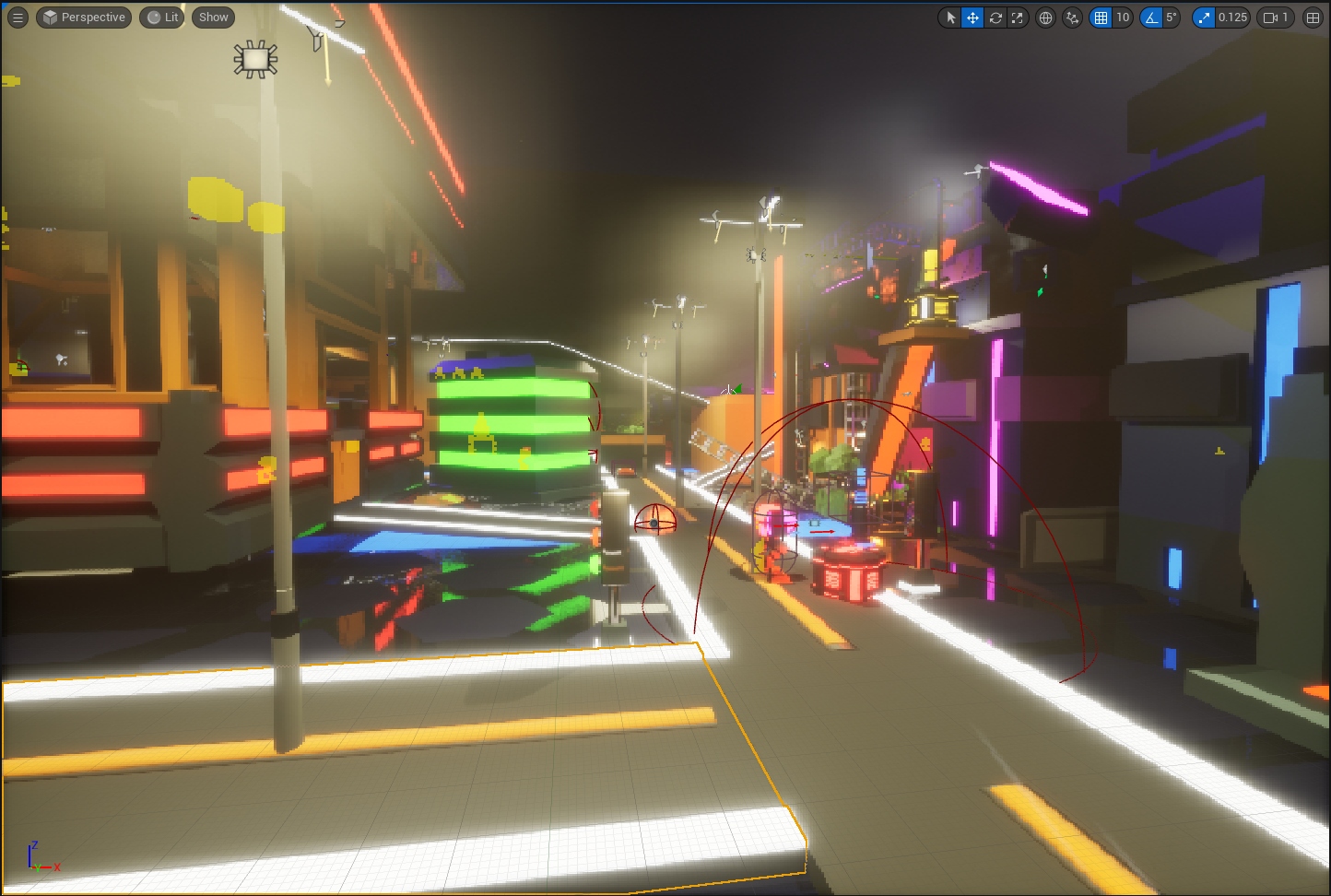
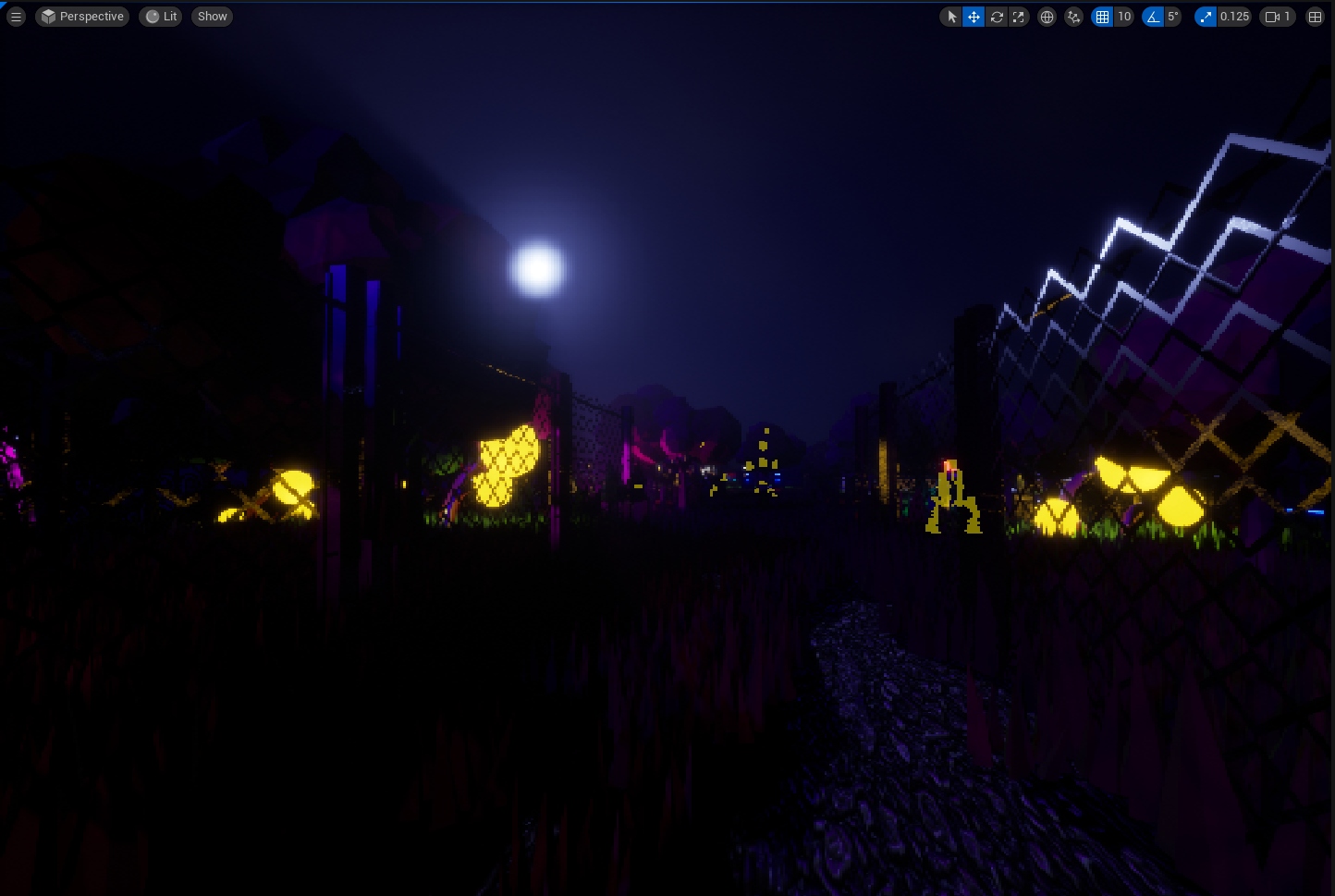
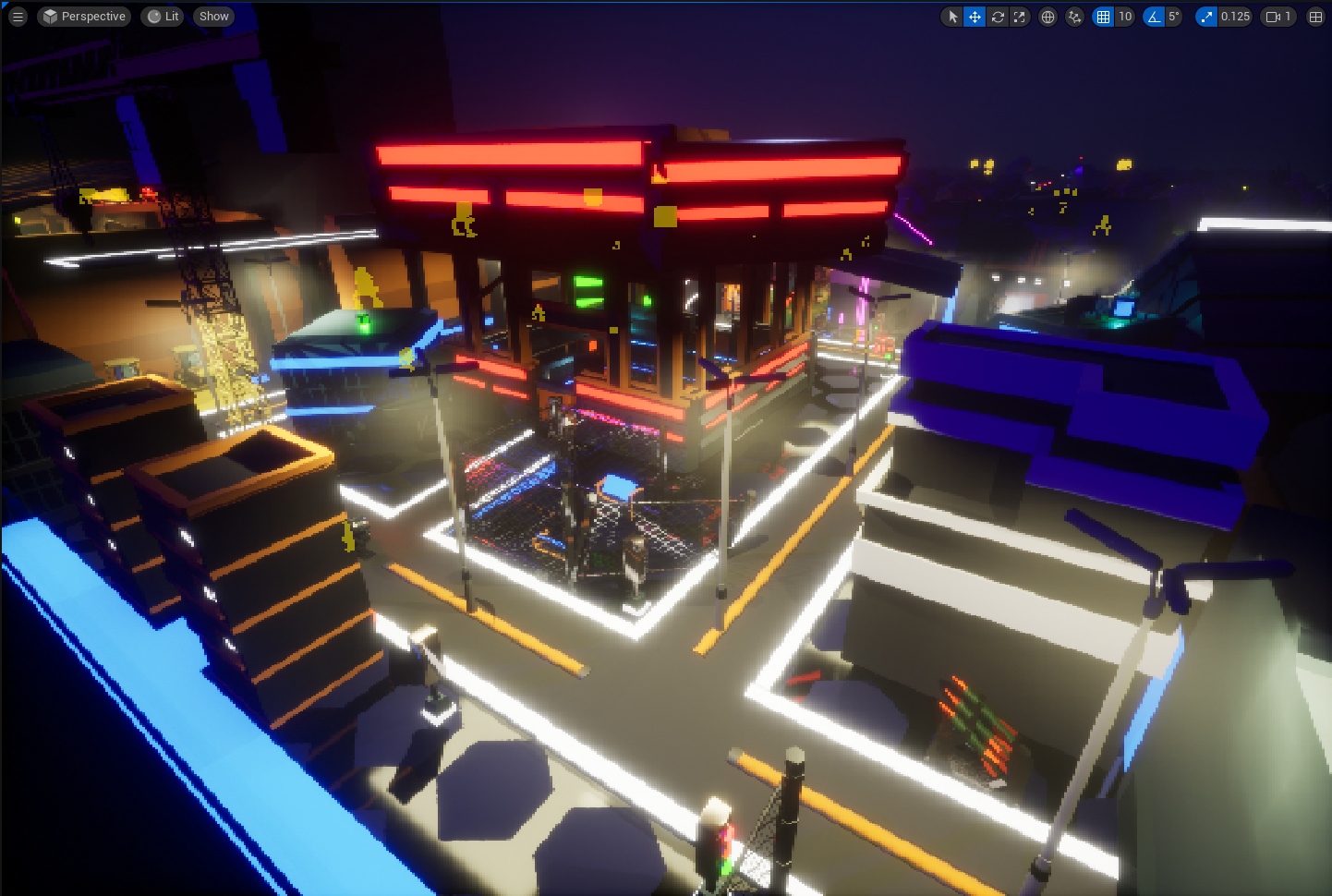
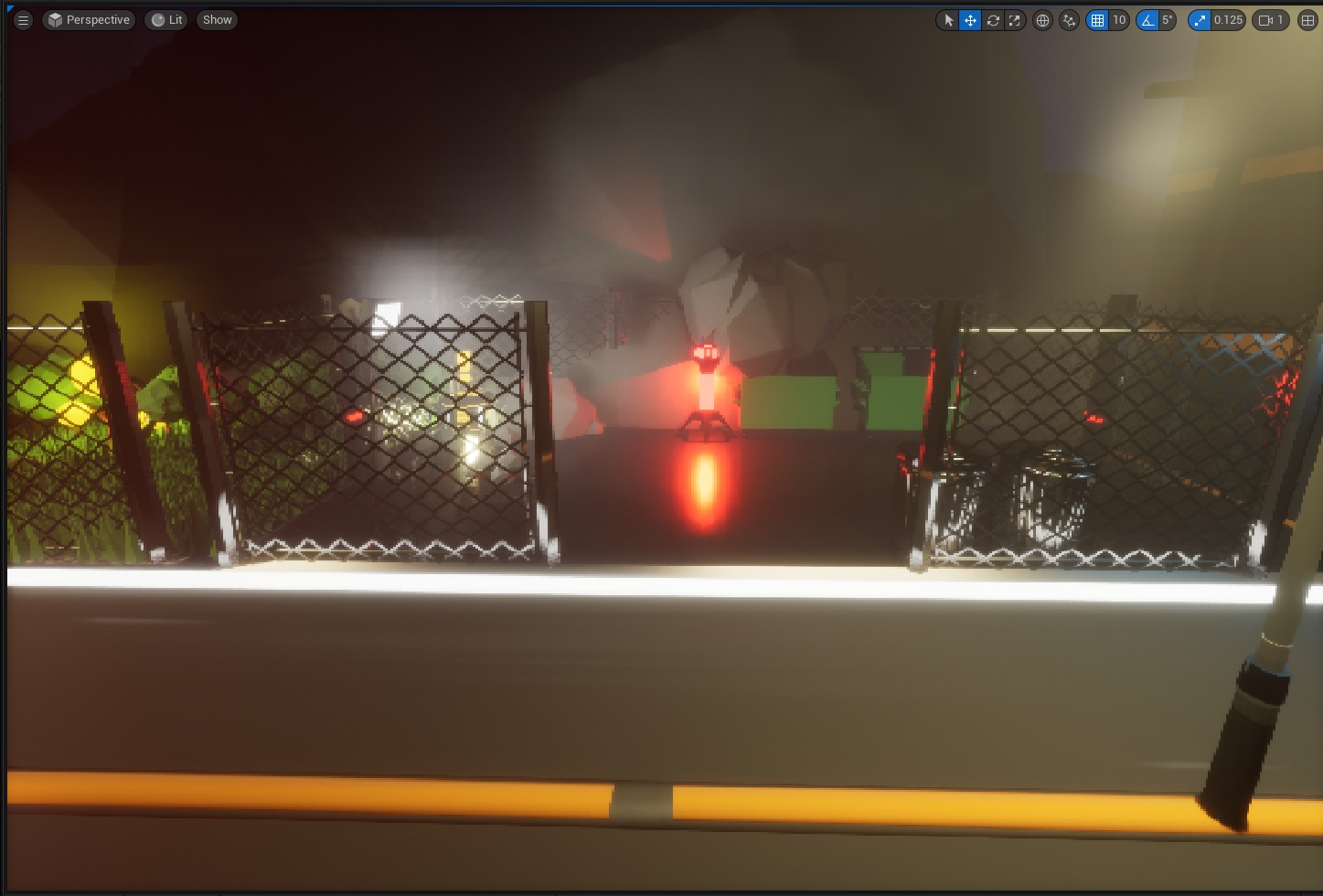
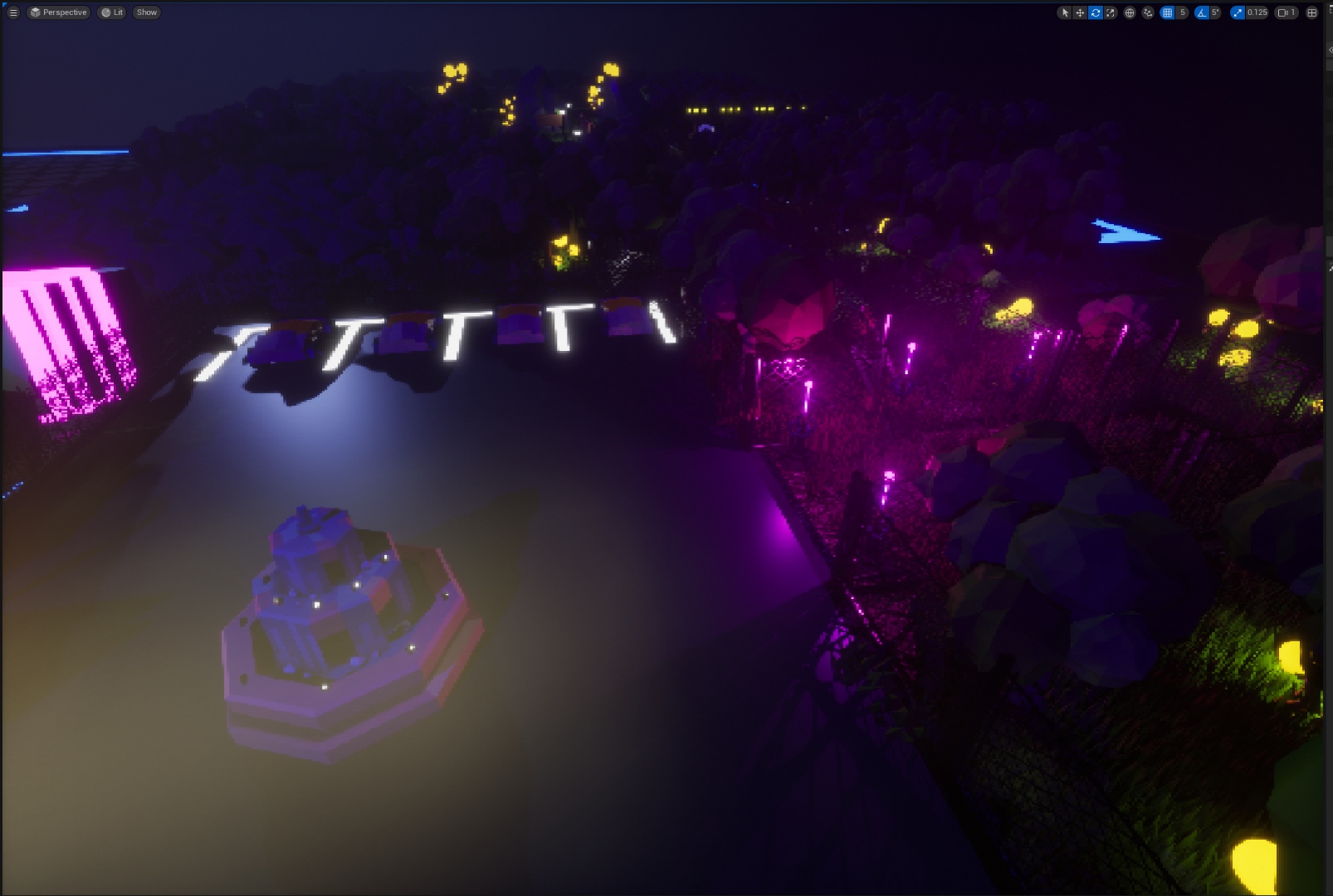
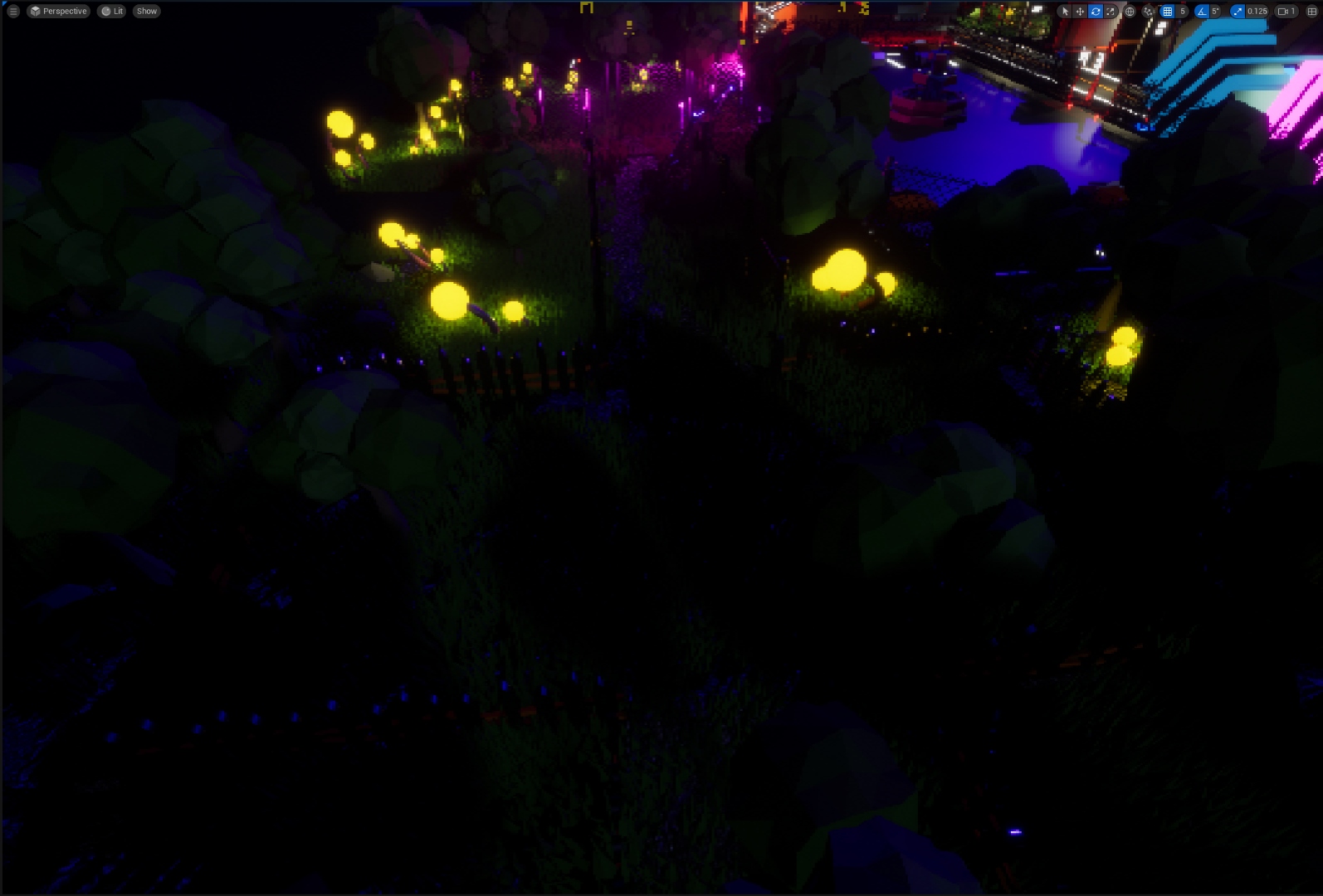
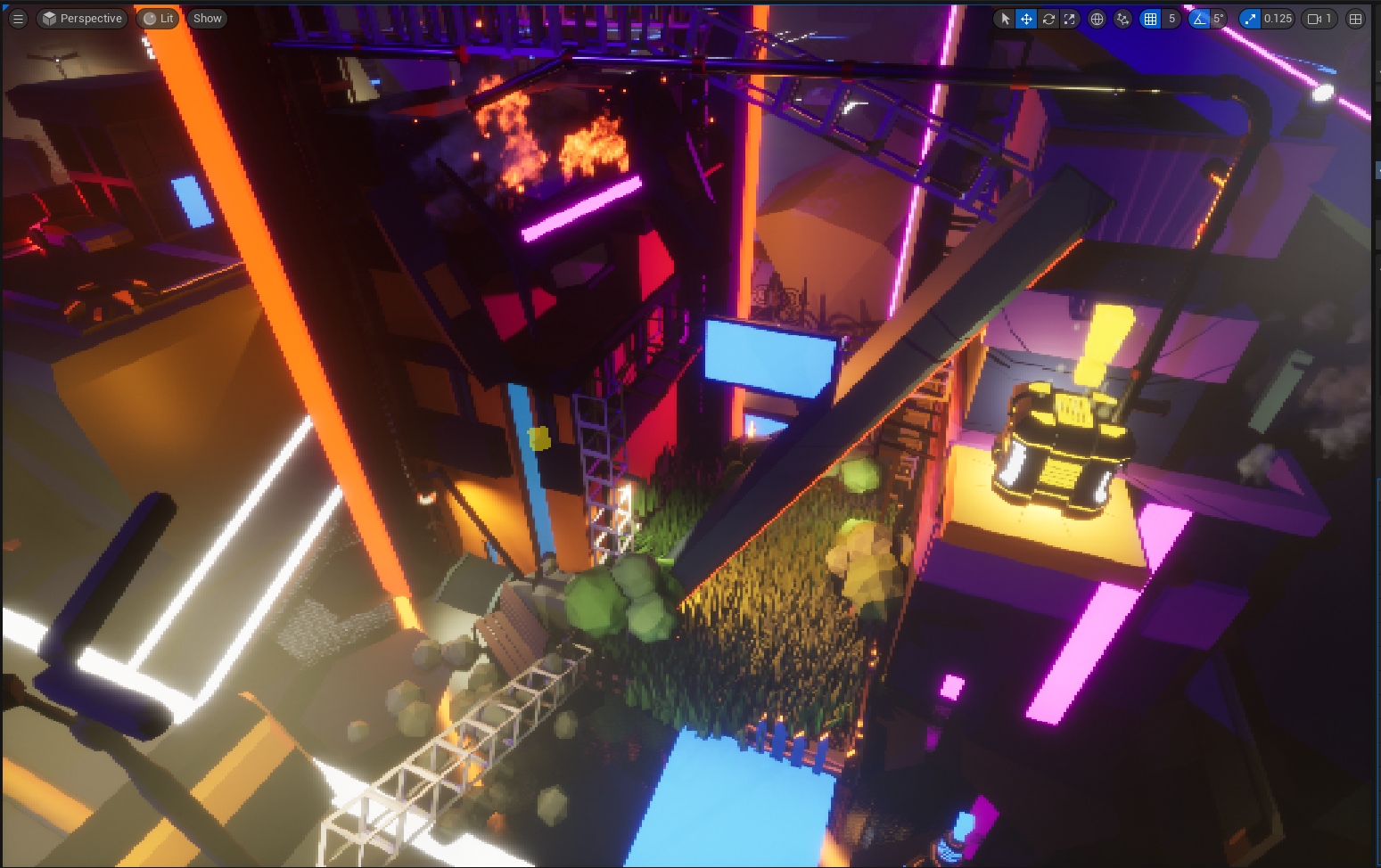
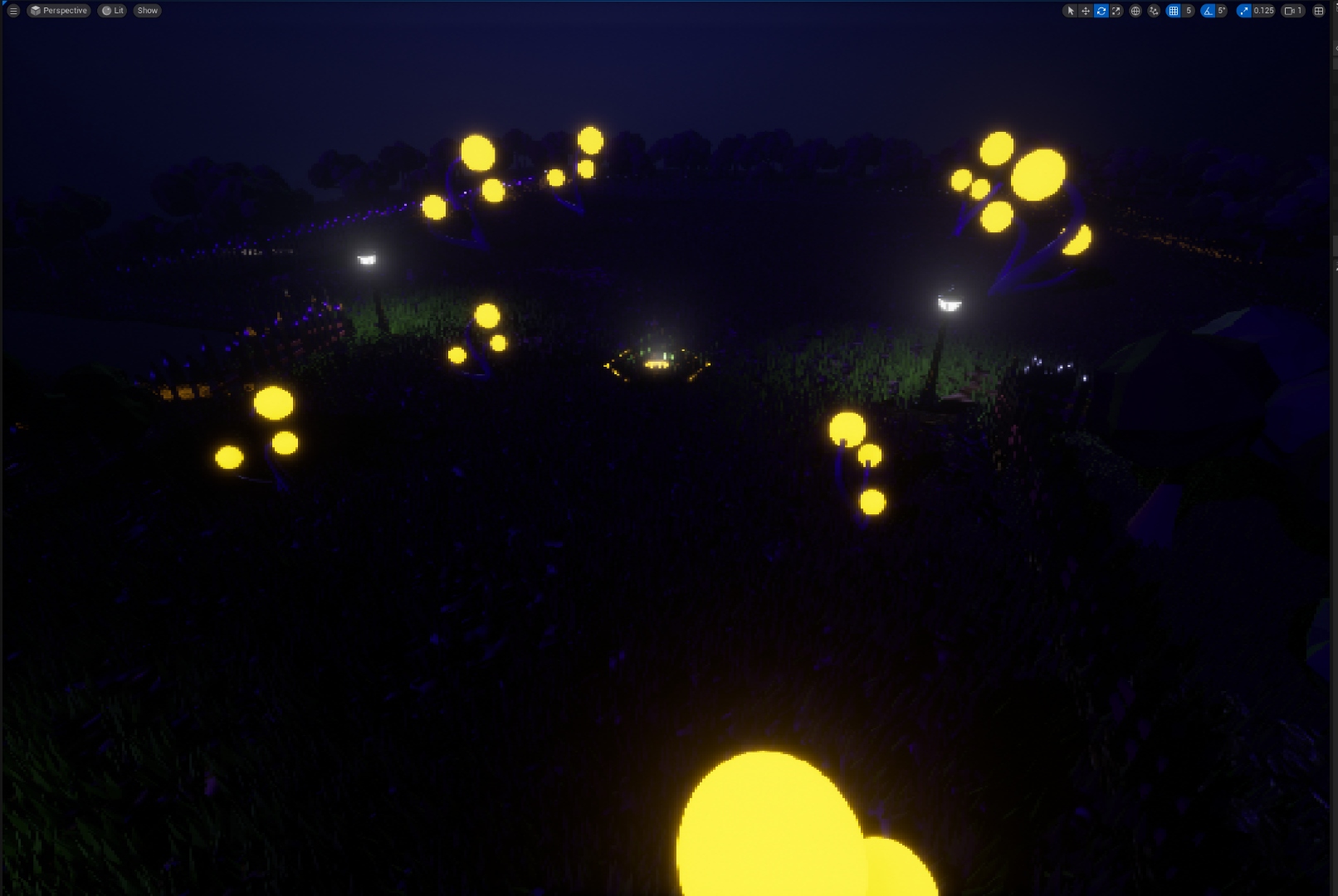
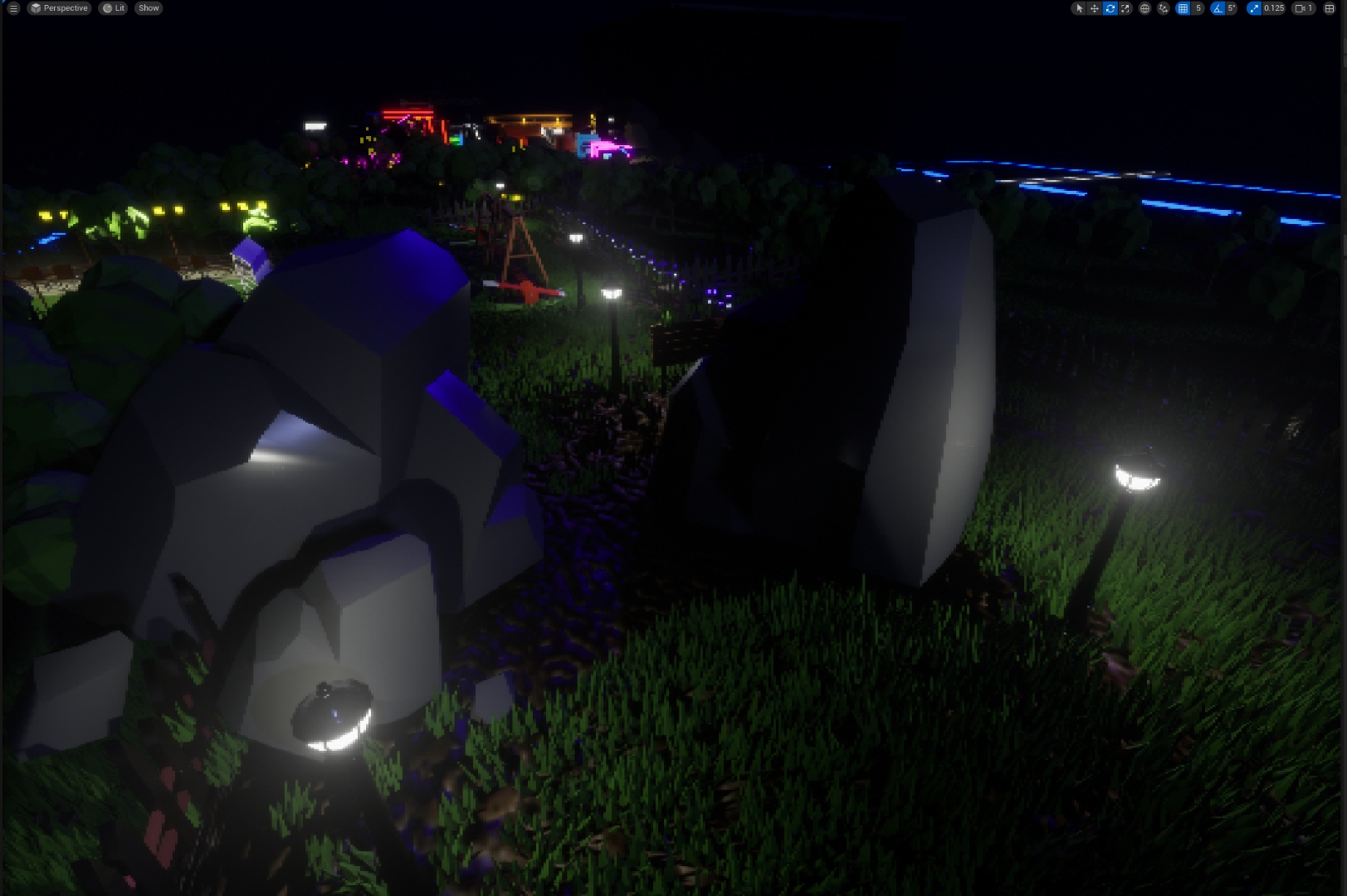
The world is a neon-soaked Sci-Fi city at night - inspired by Cyberpunk 2077's aesthetic - shot through with emissive strips, Lumen reflections, Niagara particle effects, and Bloom-heavy atmospheric lighting. The map grew substantially beyond the initial city block: a nature/jungle zone, a bioluminescent forest path, a car park, a football stadium, and a playground were all built out across the assignment period.
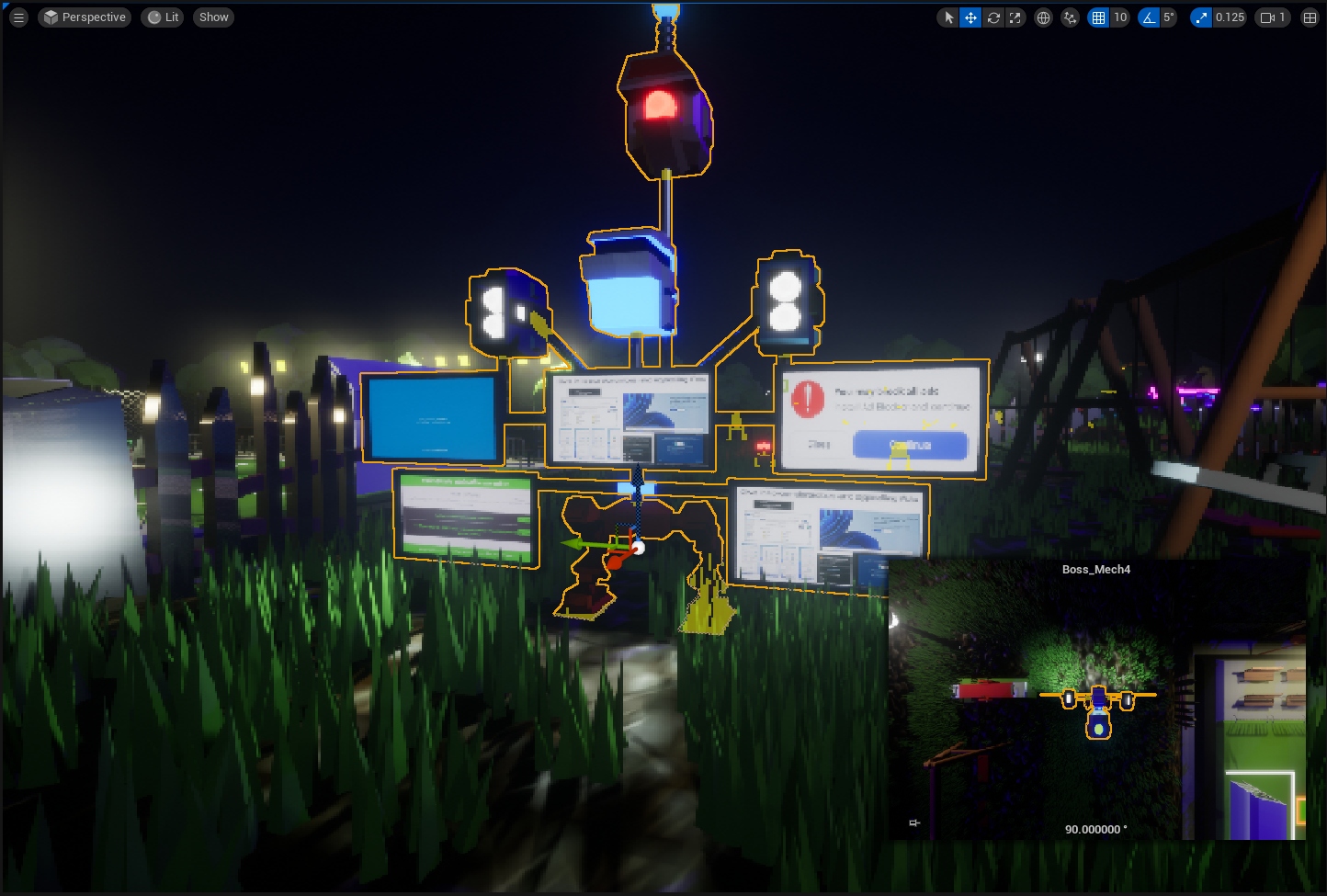
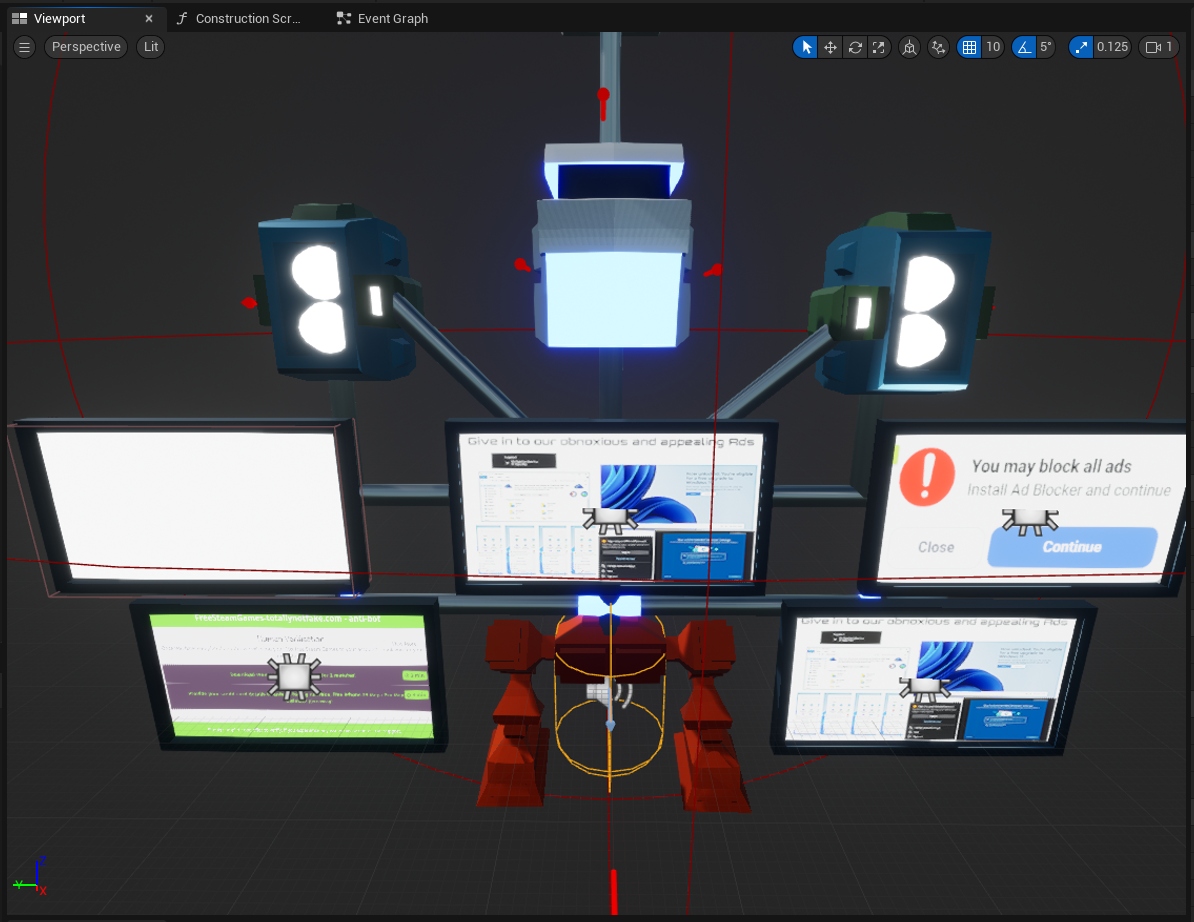
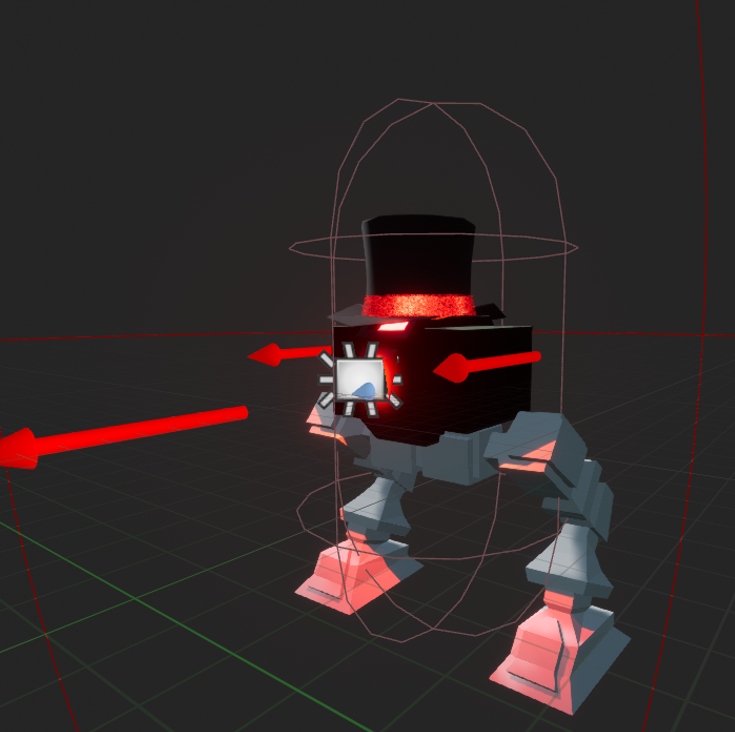
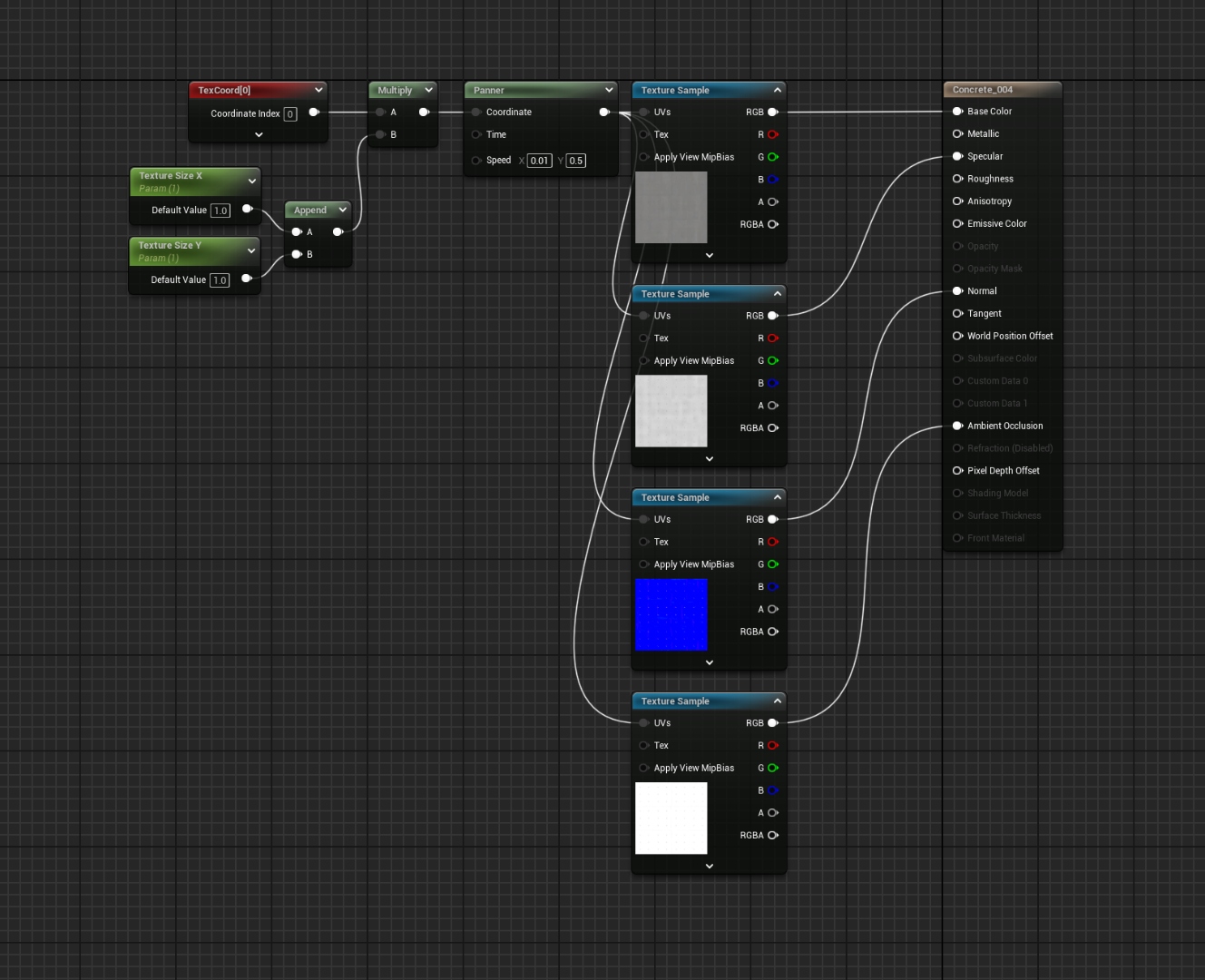
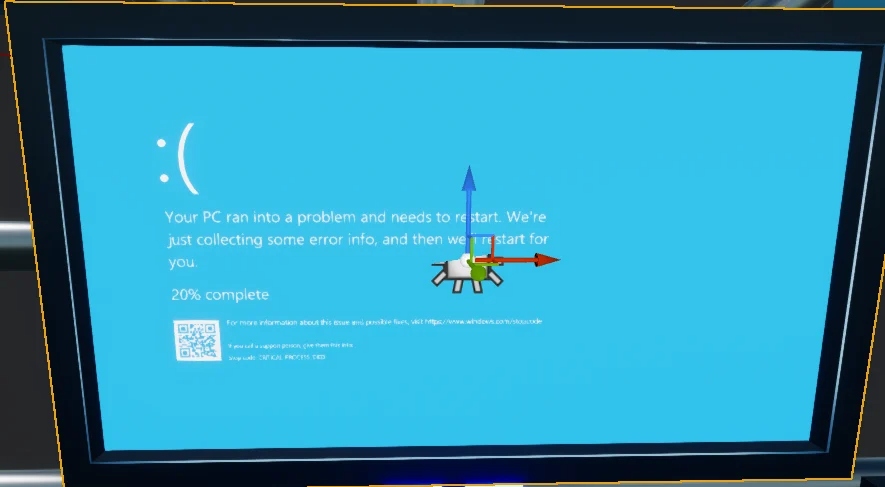
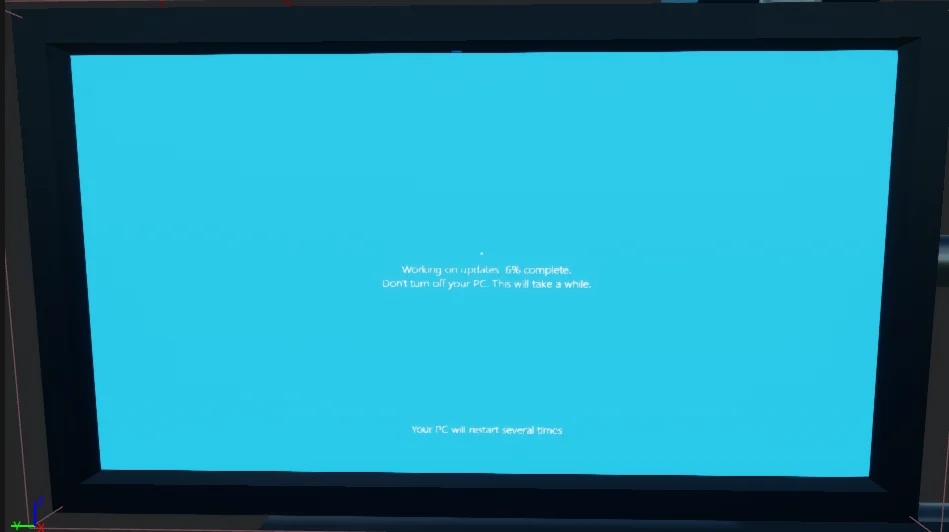
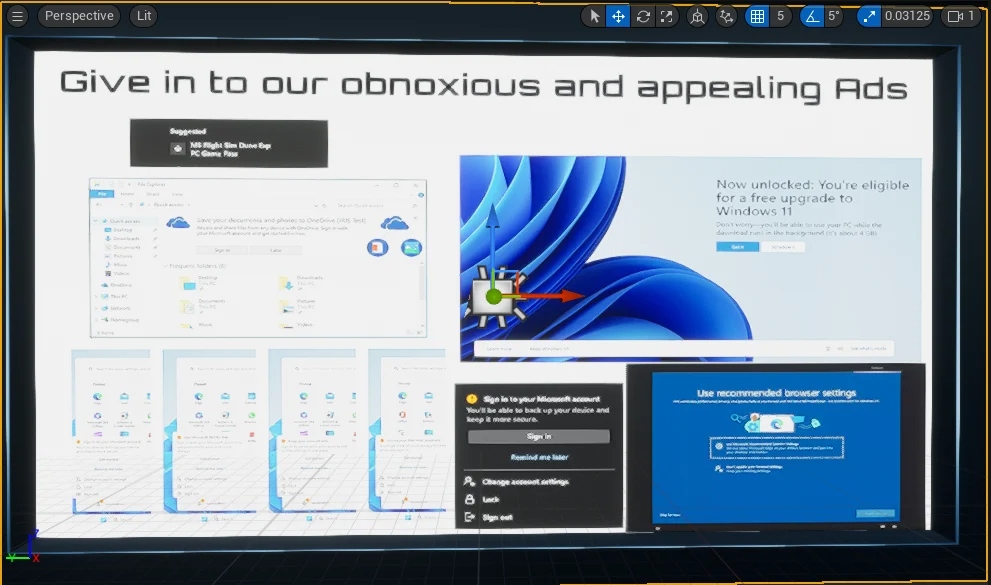
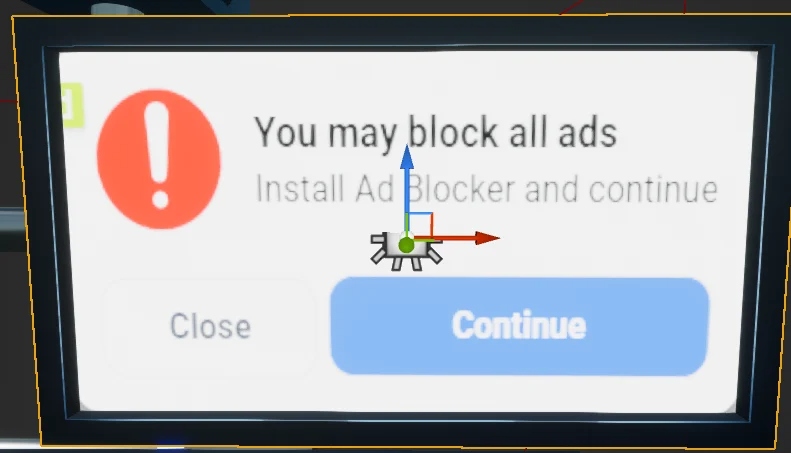
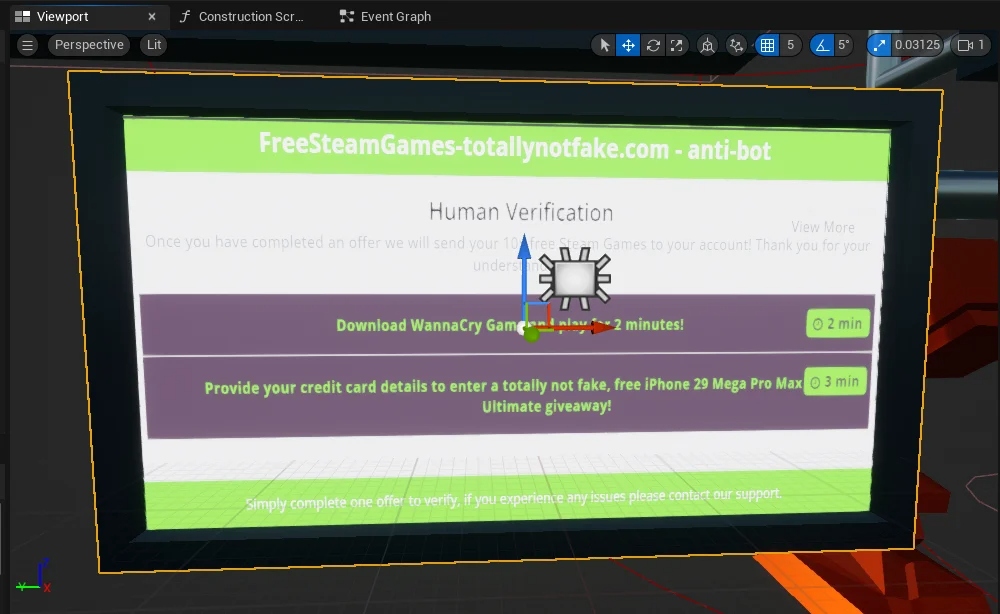
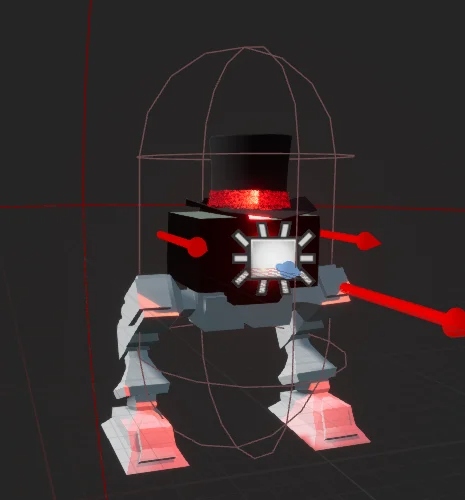
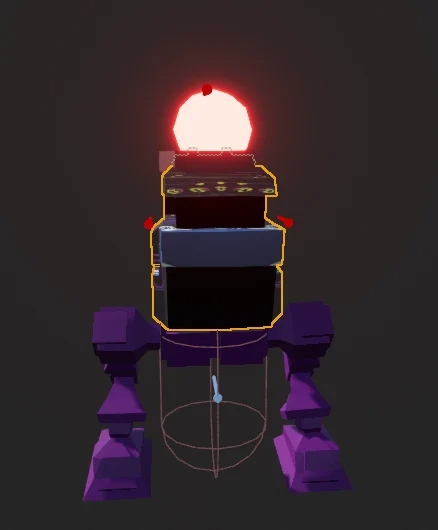
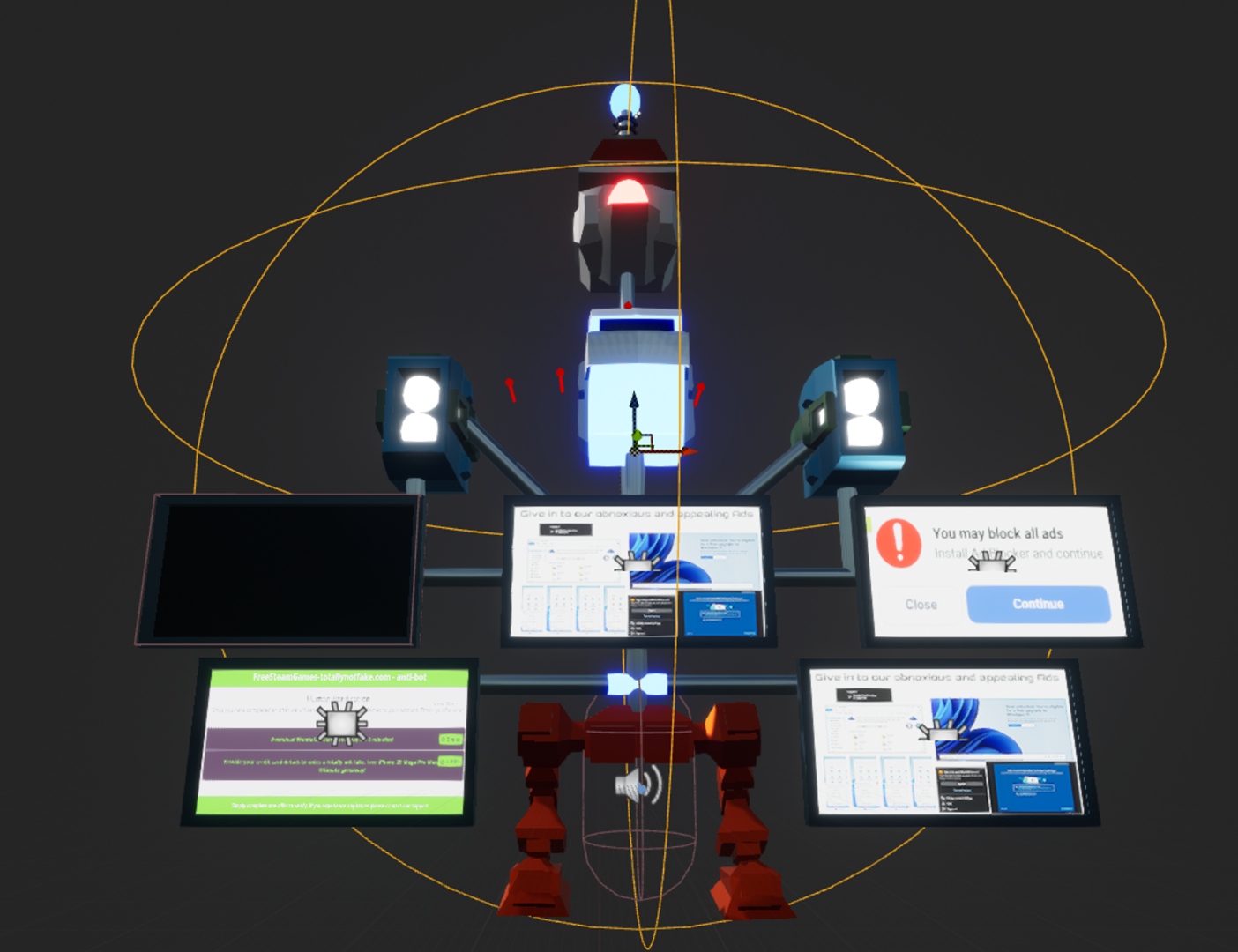
The standout material is on Boss Mech 2, which displays a BSOD texture upon hitting health thresholds - driven by checks to see if health reached a certain percentage, which then a dynamic material instance is created and switched to BSOD. Then there are the satirical in-world monitor screens surrounding the Mechanical Jackson boss arena - displaying fake ad popups, scam sites, Windows update screens, and ad-blocker prompts as fully textured meshes in the world. These were re-used for Boss Mech 2.
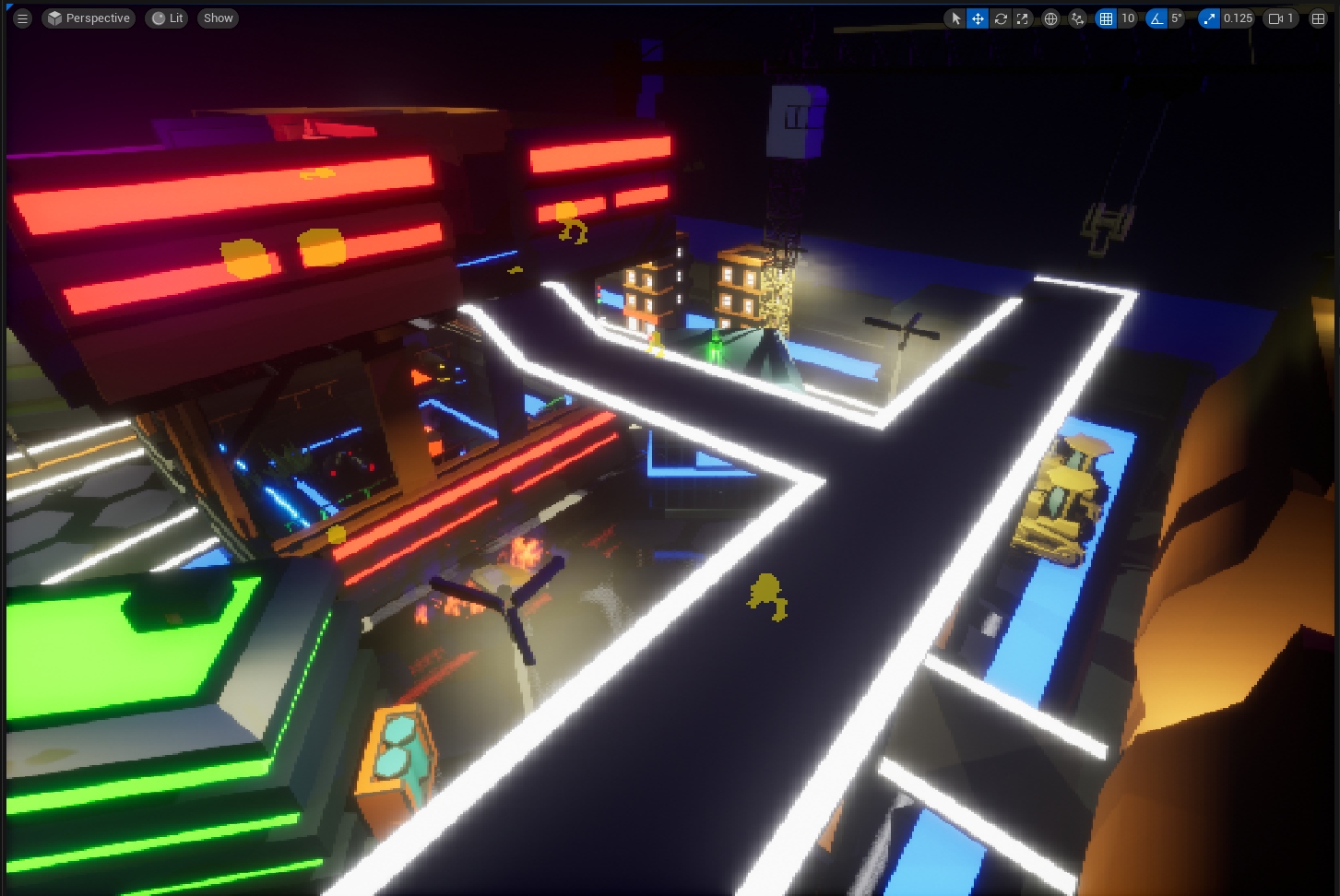
// Grand overhead — full expanded map, all districts visible
- Awarded 90% (First Class) for the module
- Five distinct enemy types built purely based on Blueprint logic
- ~Six unique map districts developed beyond the initial framework brief
- Dynamic BSOD material triggered at runtime
- Football stadium, playground, and bioluminescent forest, were made
- Approximately 105 Unreal Engine 5 crashes survived across development, losing significant work
Gameplay
Full Gameplay Video
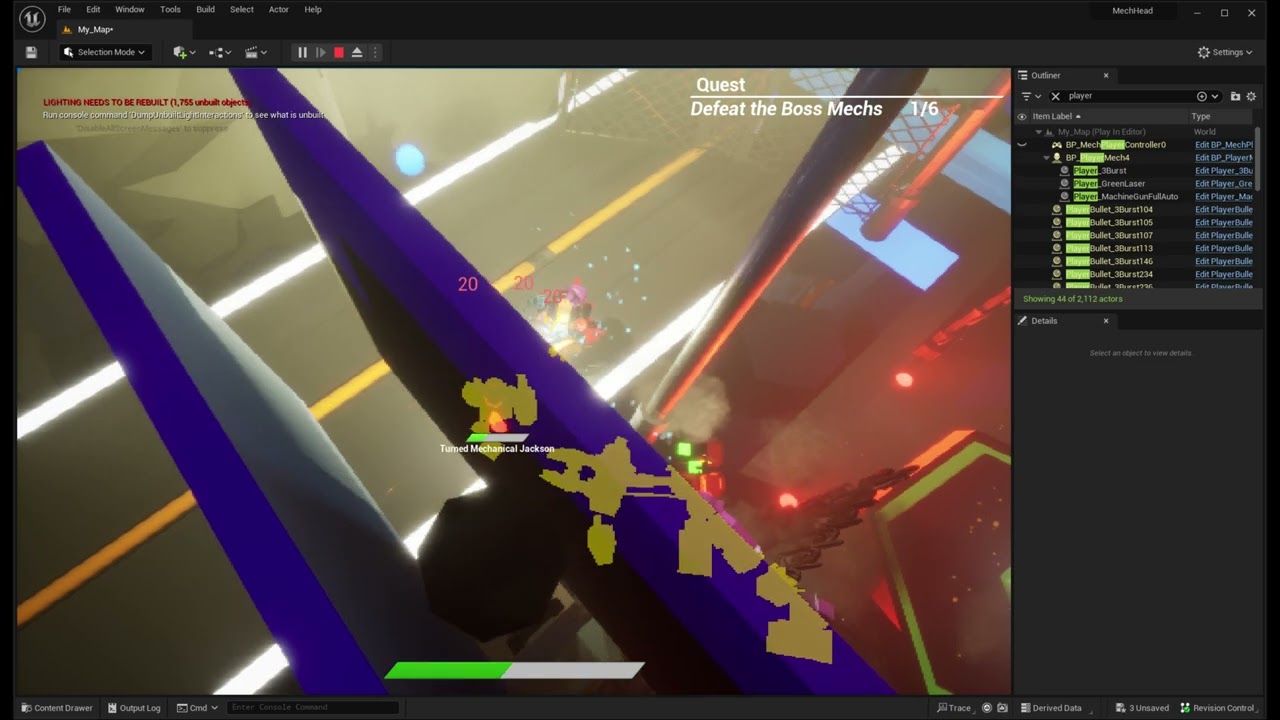
// Full gameplay walkthrough — Staffordshire University assignment submission
Enemy Roster
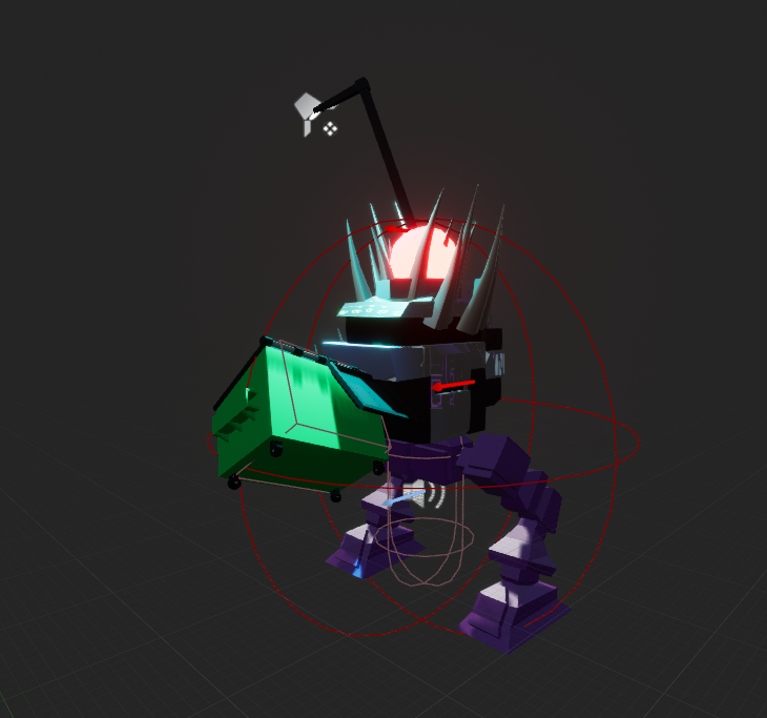
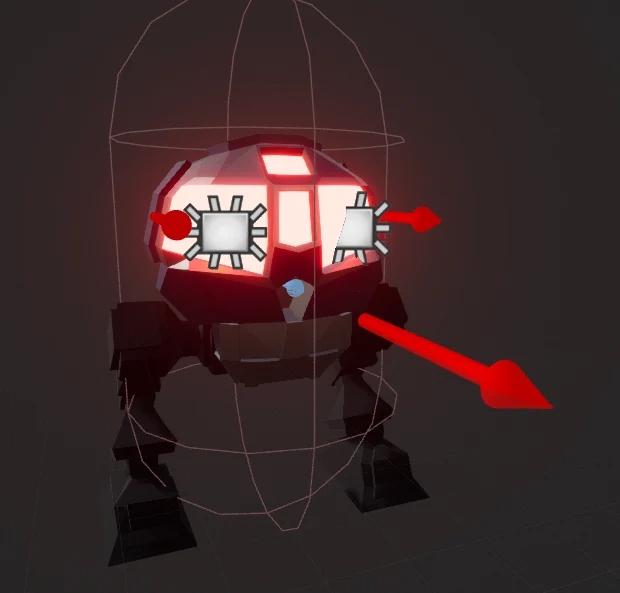
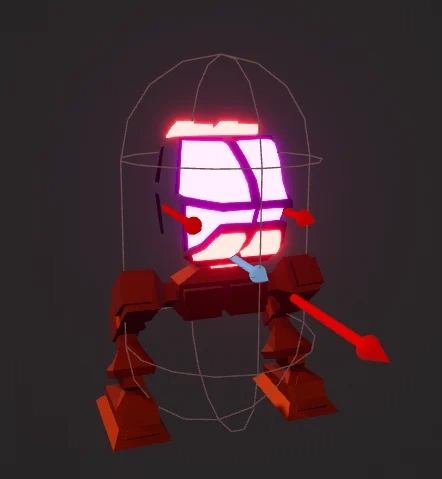
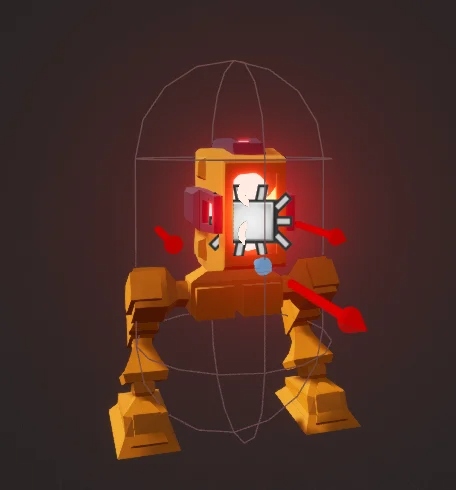
Five Enemy Types
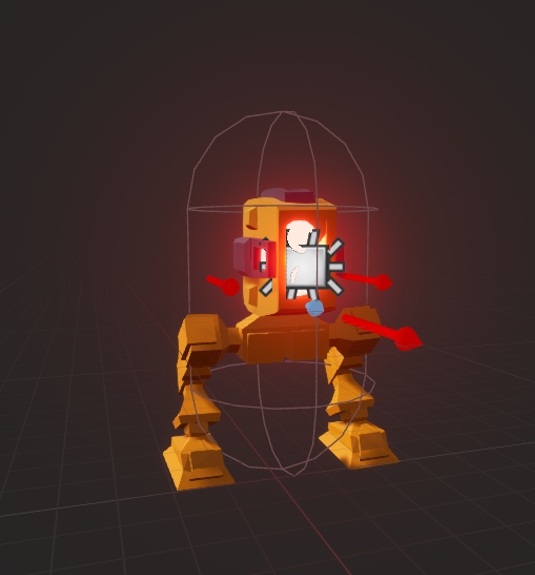
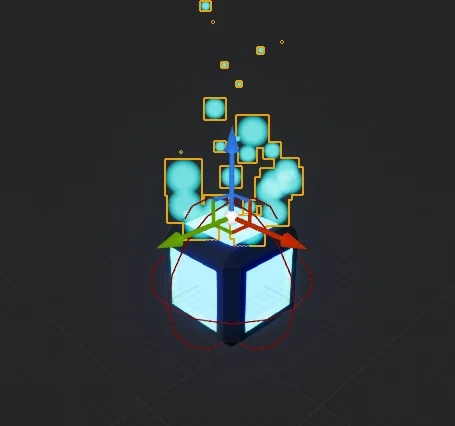
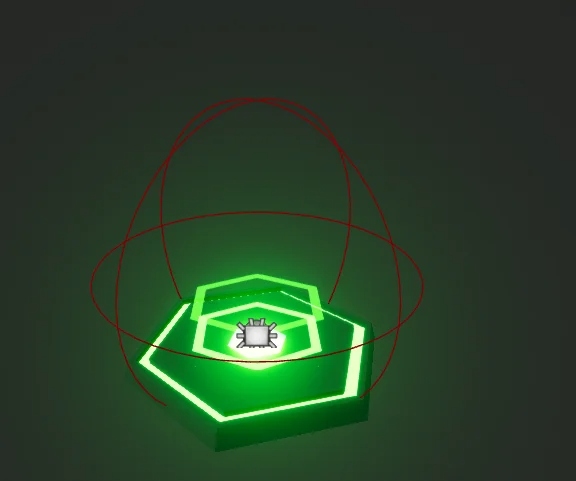
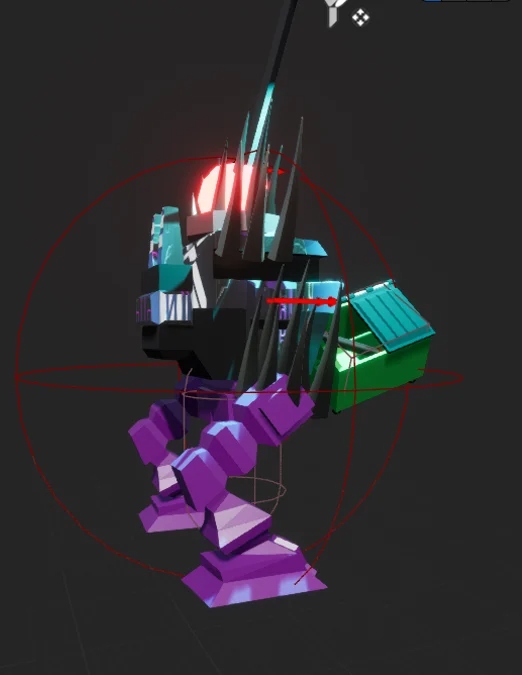
// Bomber Mech
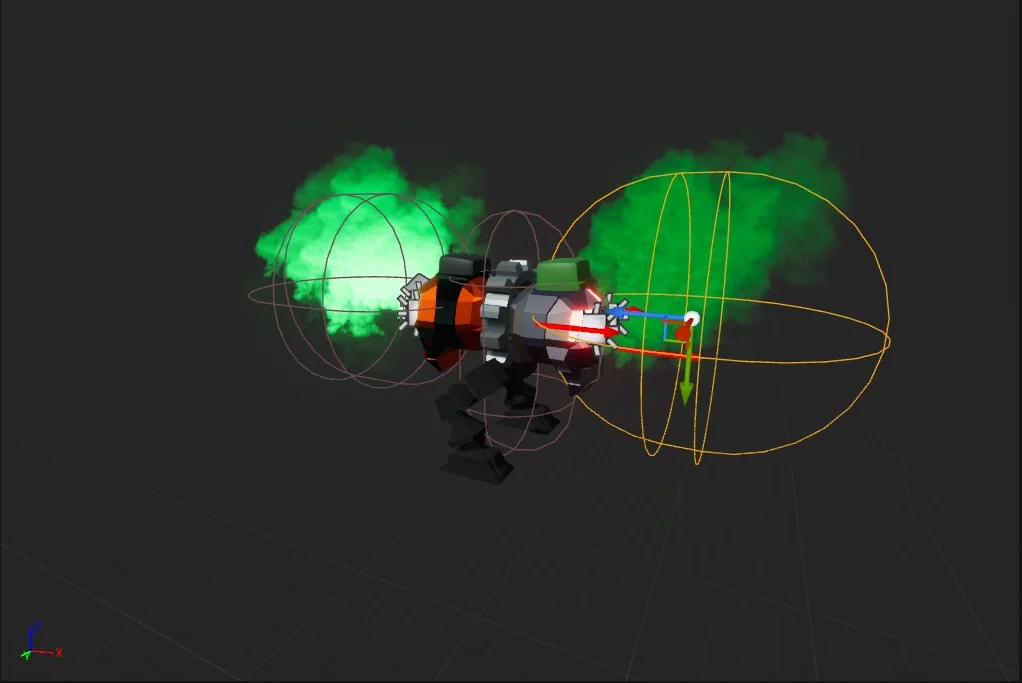
// Chaser Mech
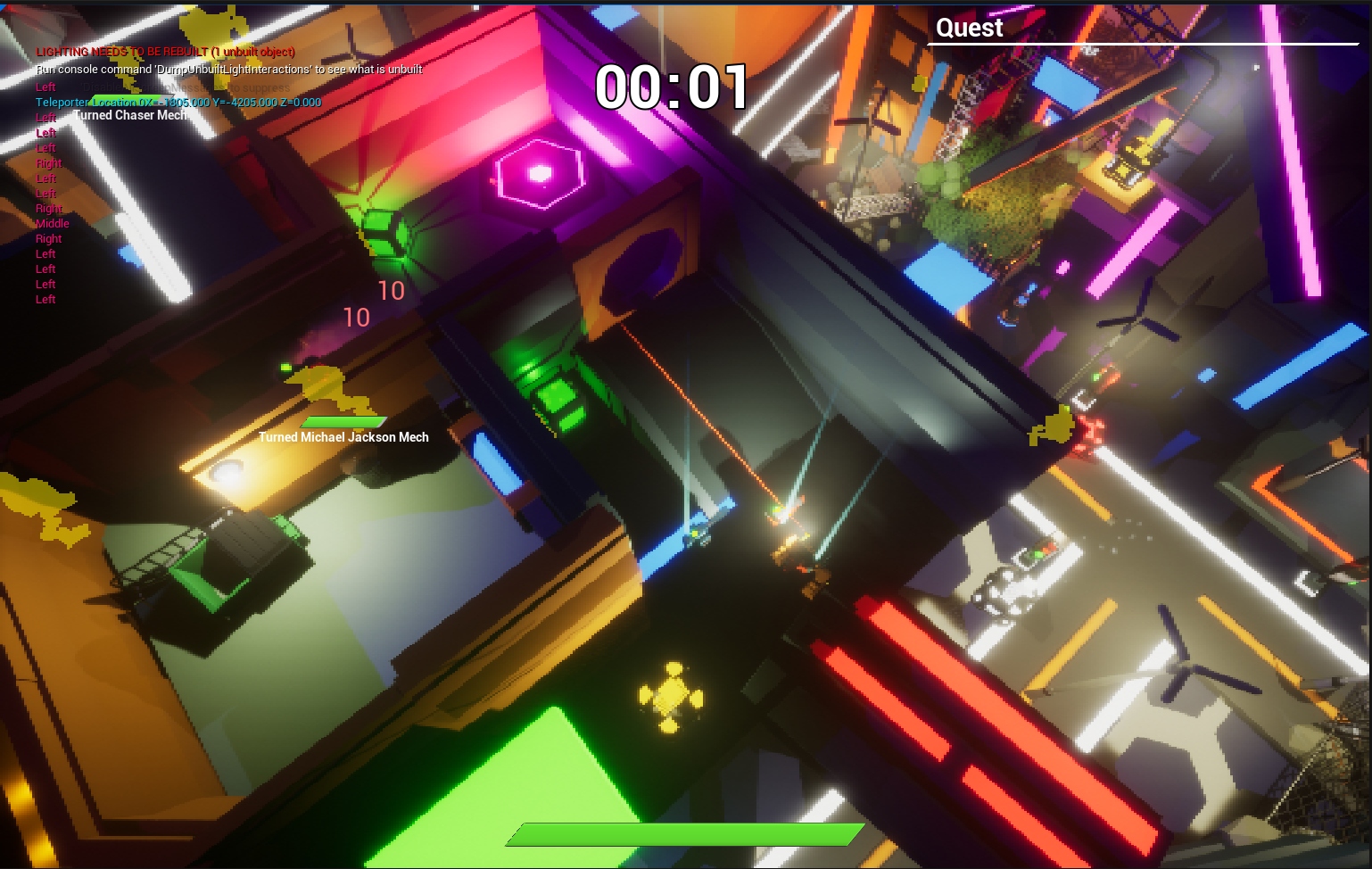
// Mechanical Jackson
World Design
Districts & Zones
The map expanded well beyond the original city block brief. Each zone has a distinct visual identity while keeping the low-poly emissive aesthetic consistent:
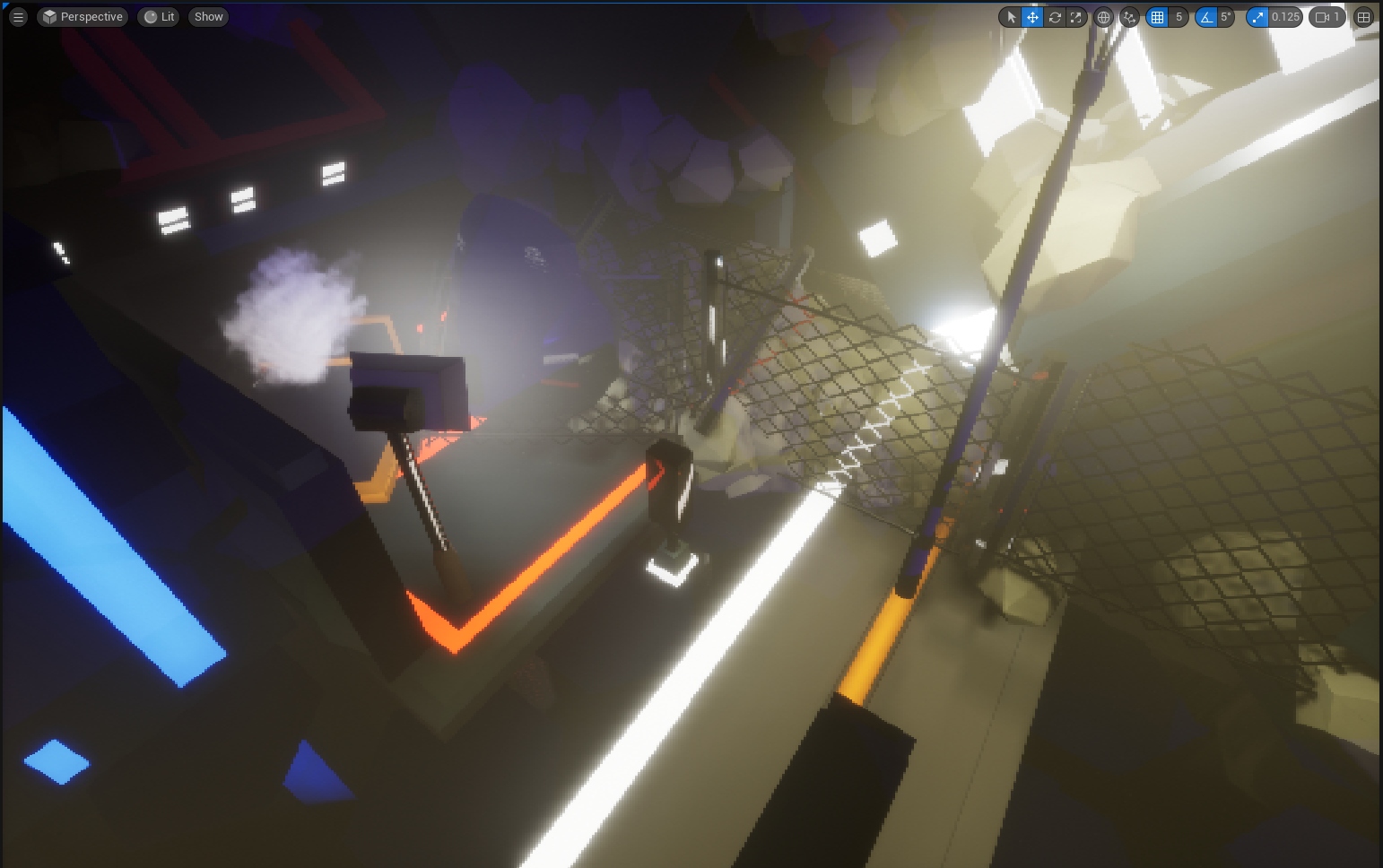
- Neon City Core - the main sci-fi district. Emissive road strips, Lumen reflections on metallic surfaces, and pink and cyan city blocks; inspired by Cyberpunk 2077 and Defense Grid 2's level design.
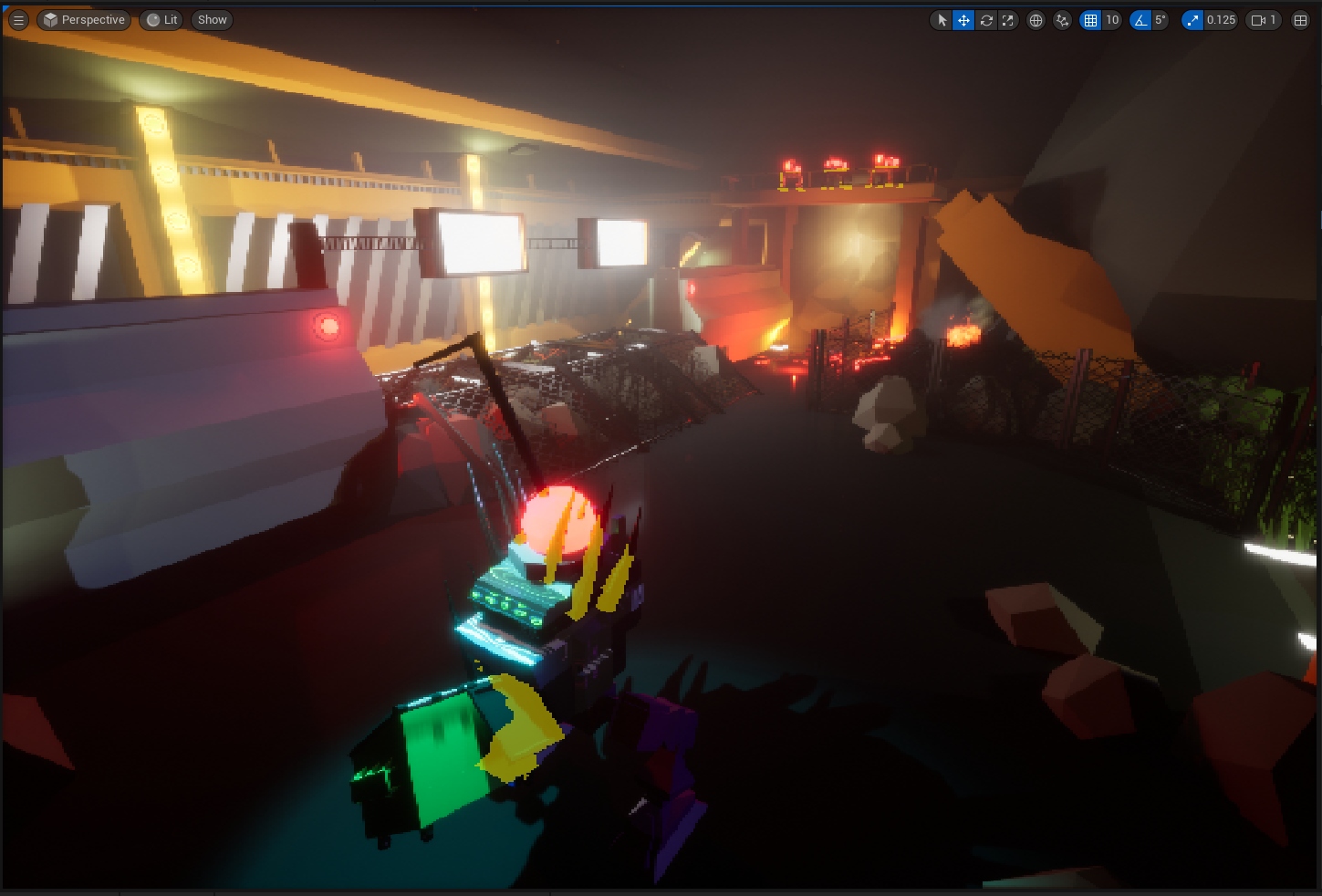
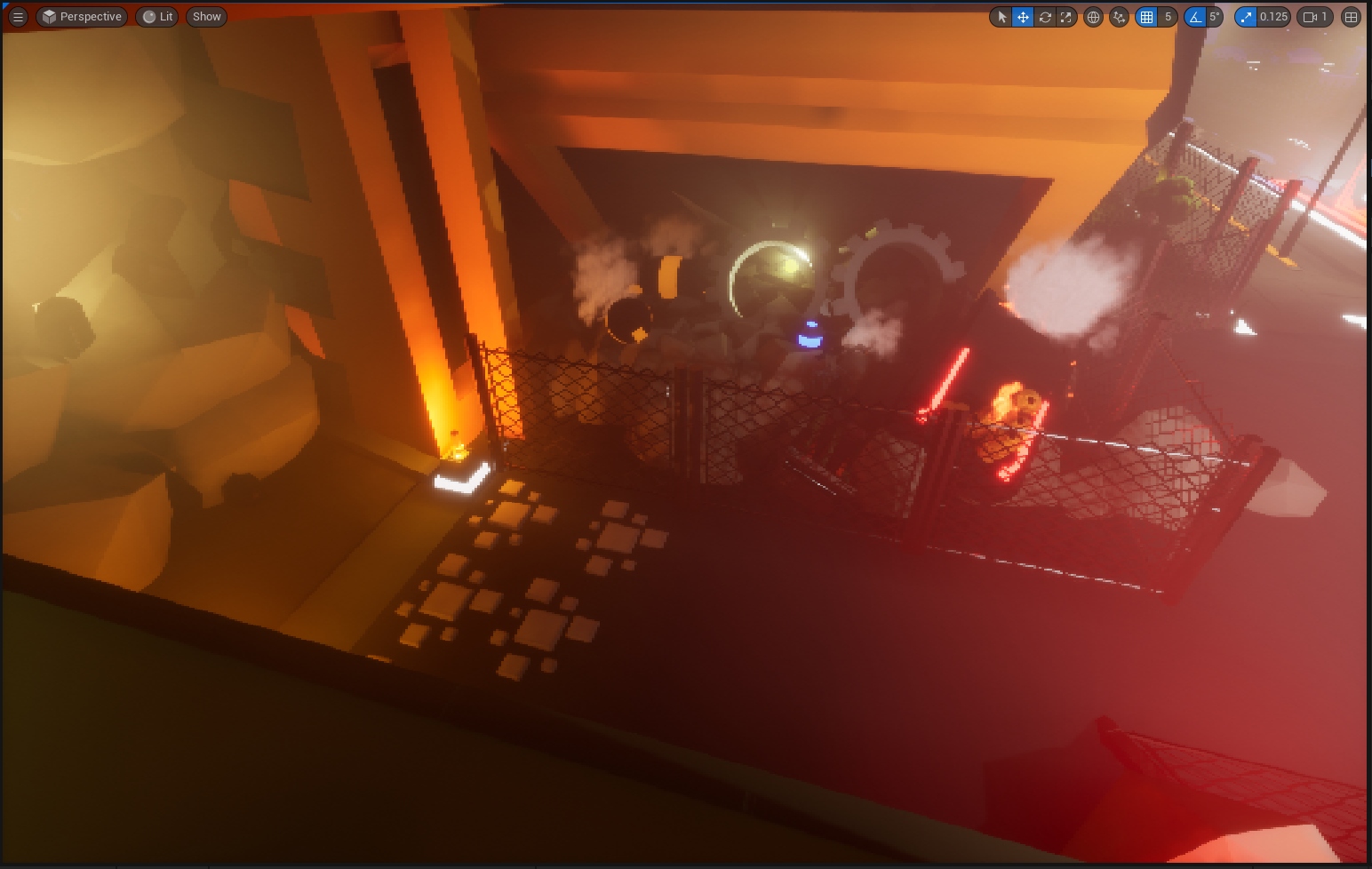
- Orange Factory Arena - rotating gear prop, fire Niagara VFX, industrial checkerboard floor. Boss encounter space.
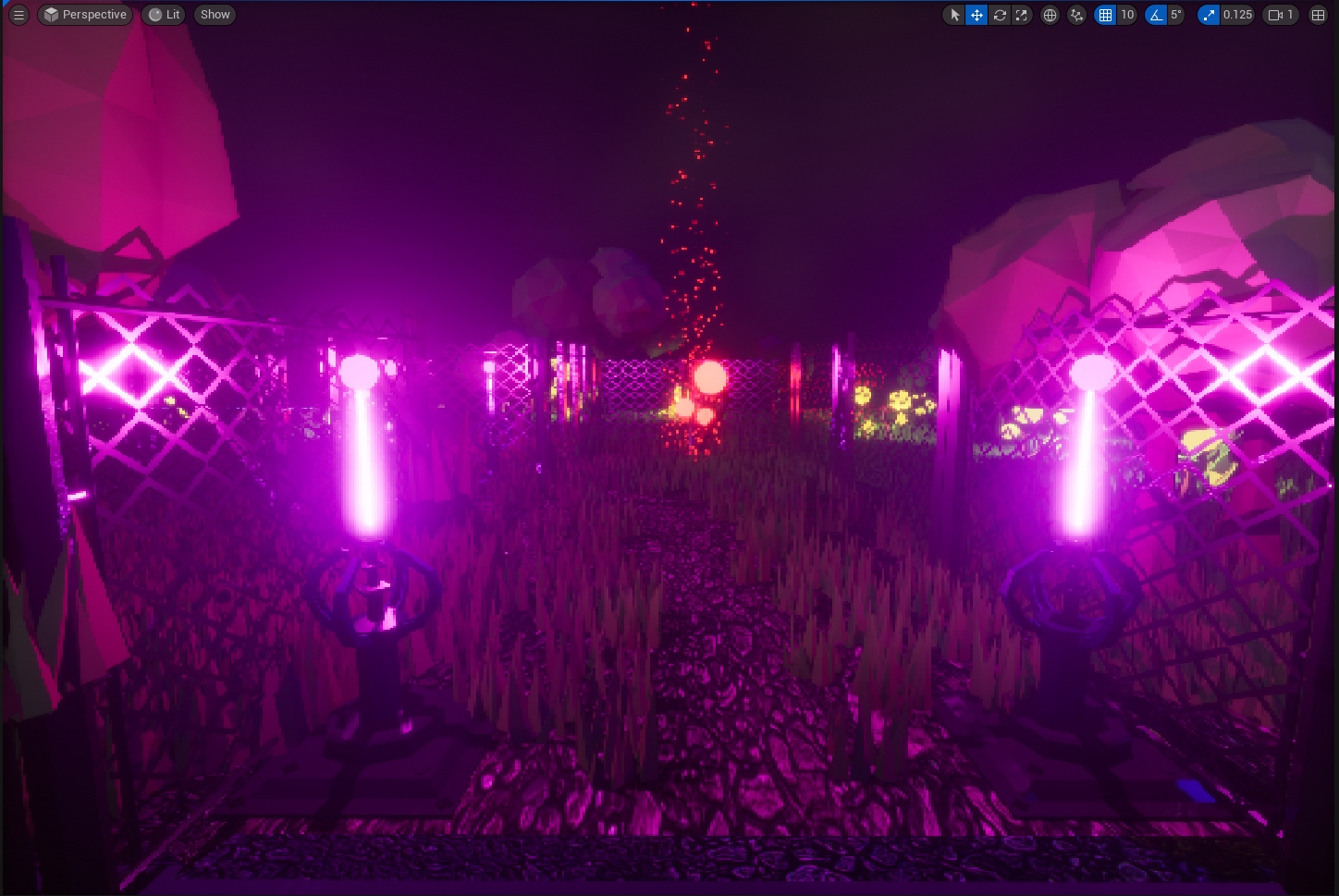
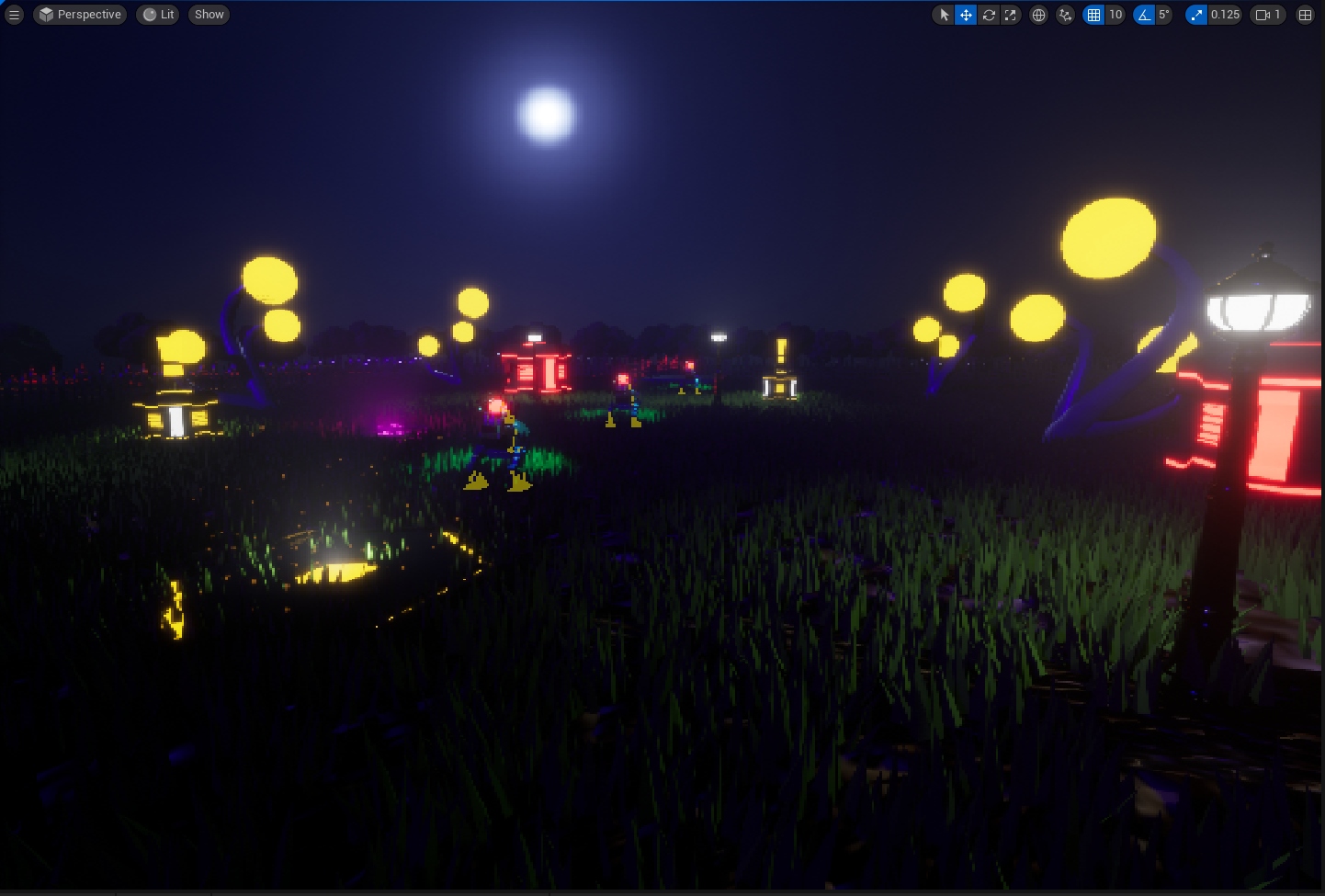
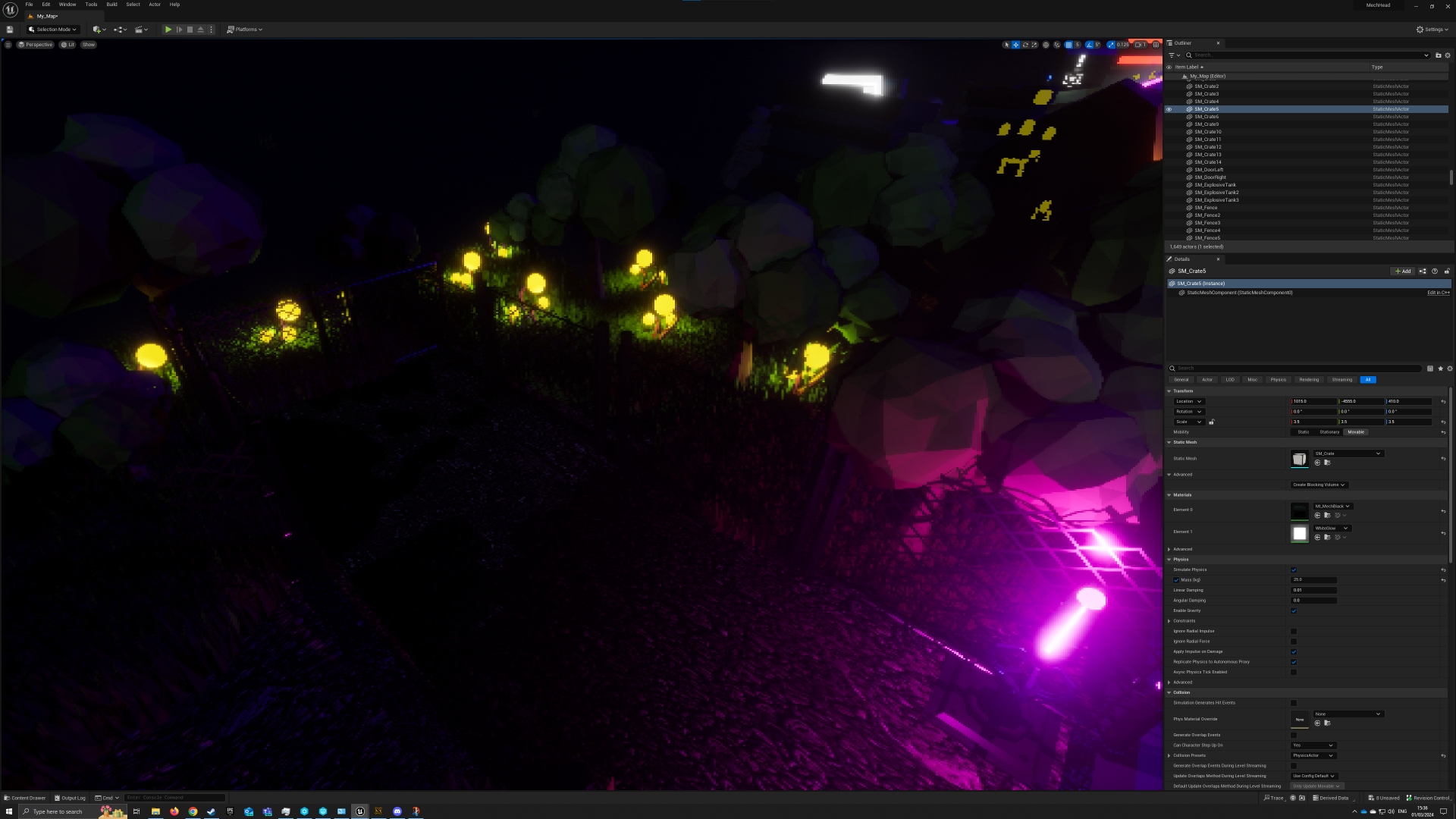
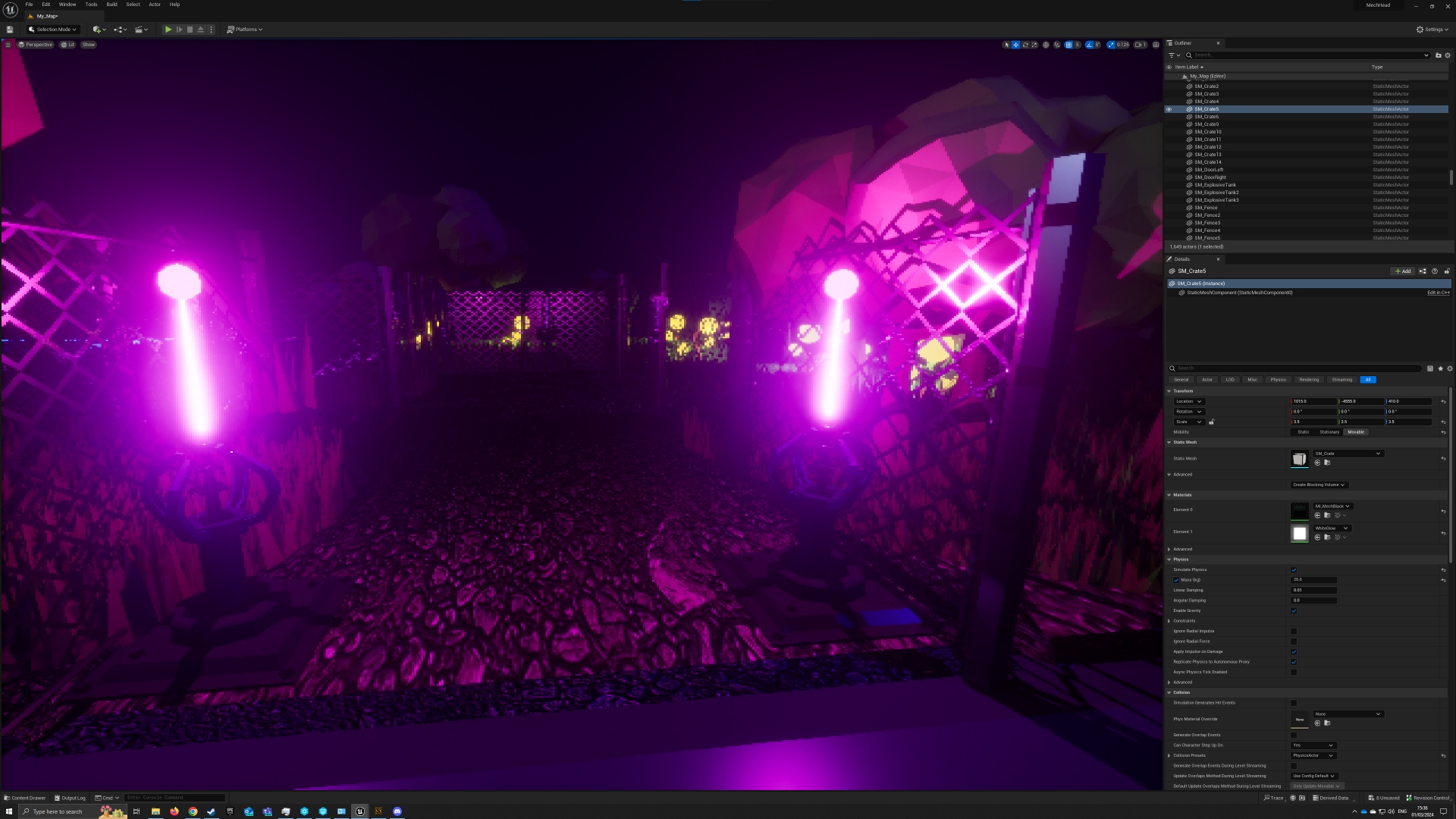
- Nature & Forest Zone - jungle path with magenta tree lighting, bioluminescent yellow glowing orb clusters for navigation, breakable crates scattered in grass. Some tree lights are reactive/motion-sensed for player's presence.
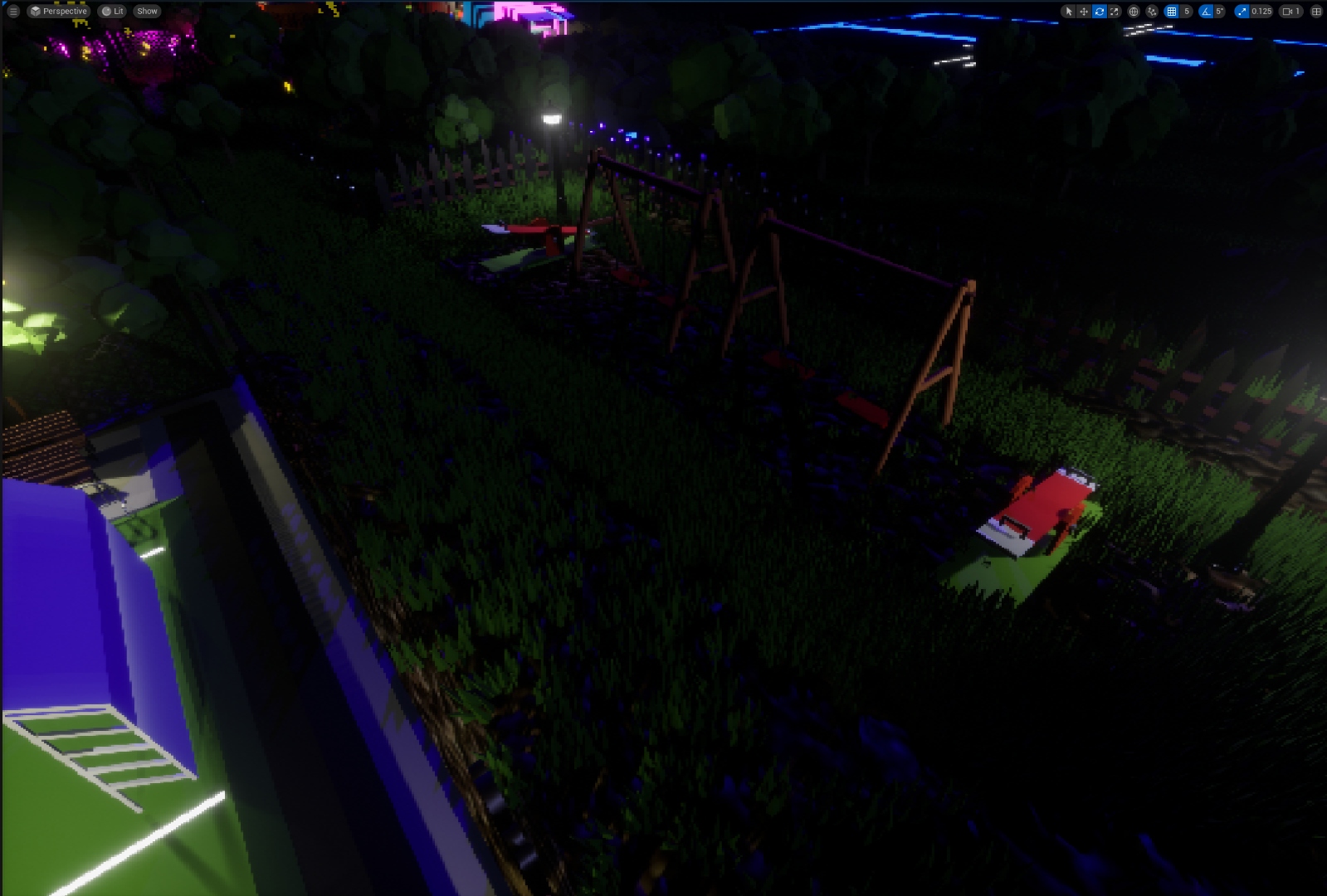
- Playground Area - swing sets, park fencing, positioned as a contrast zone to the industrial city.
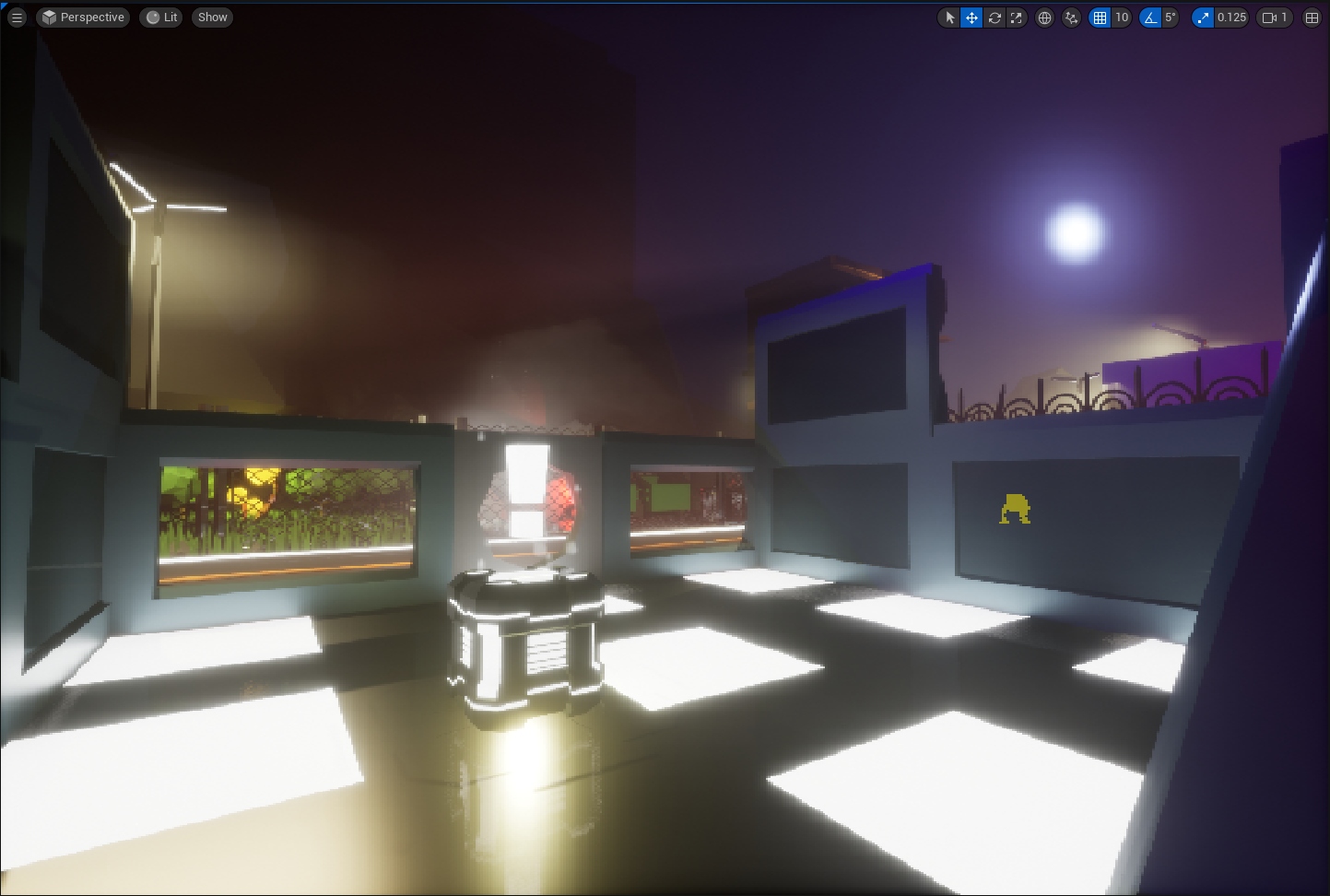
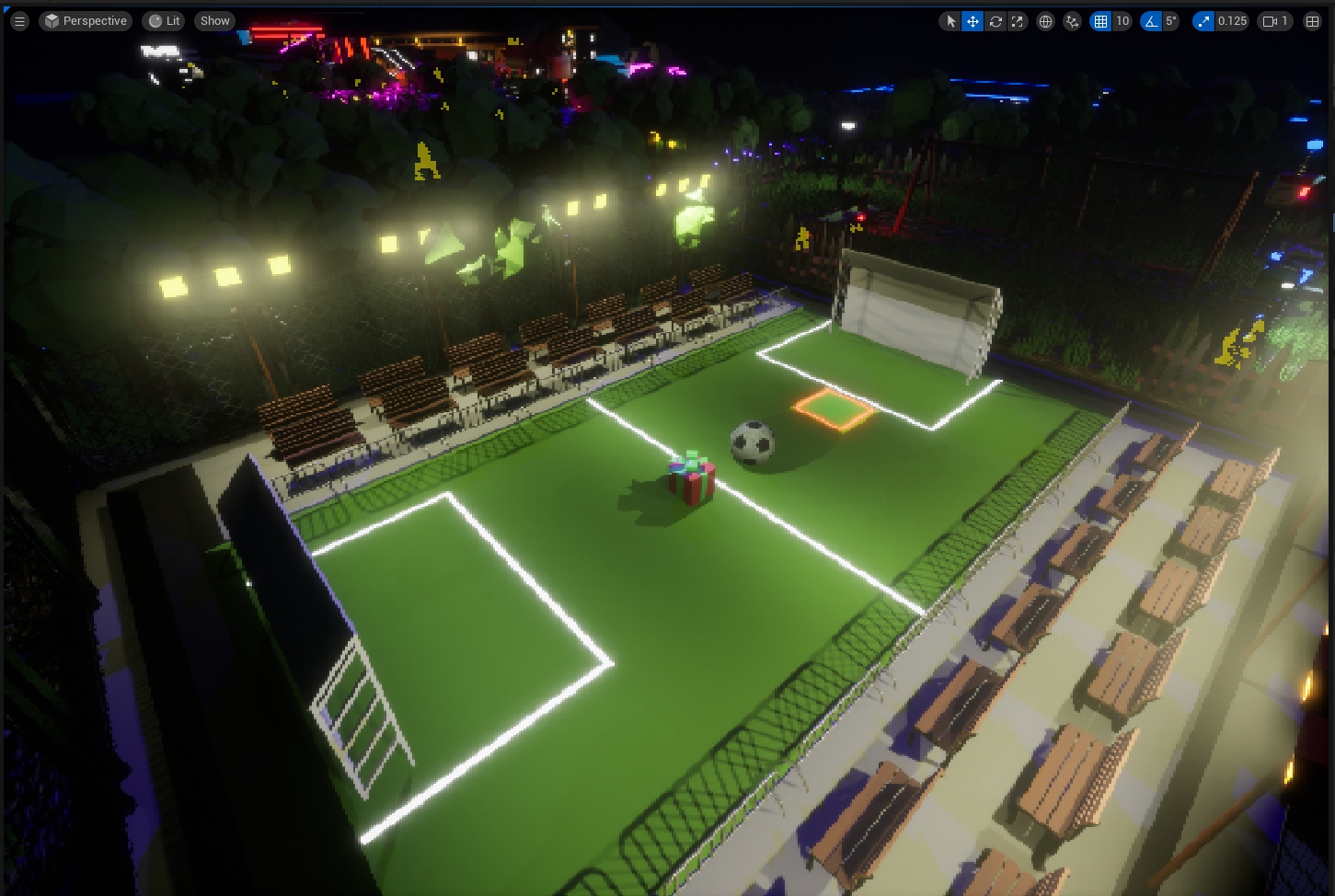
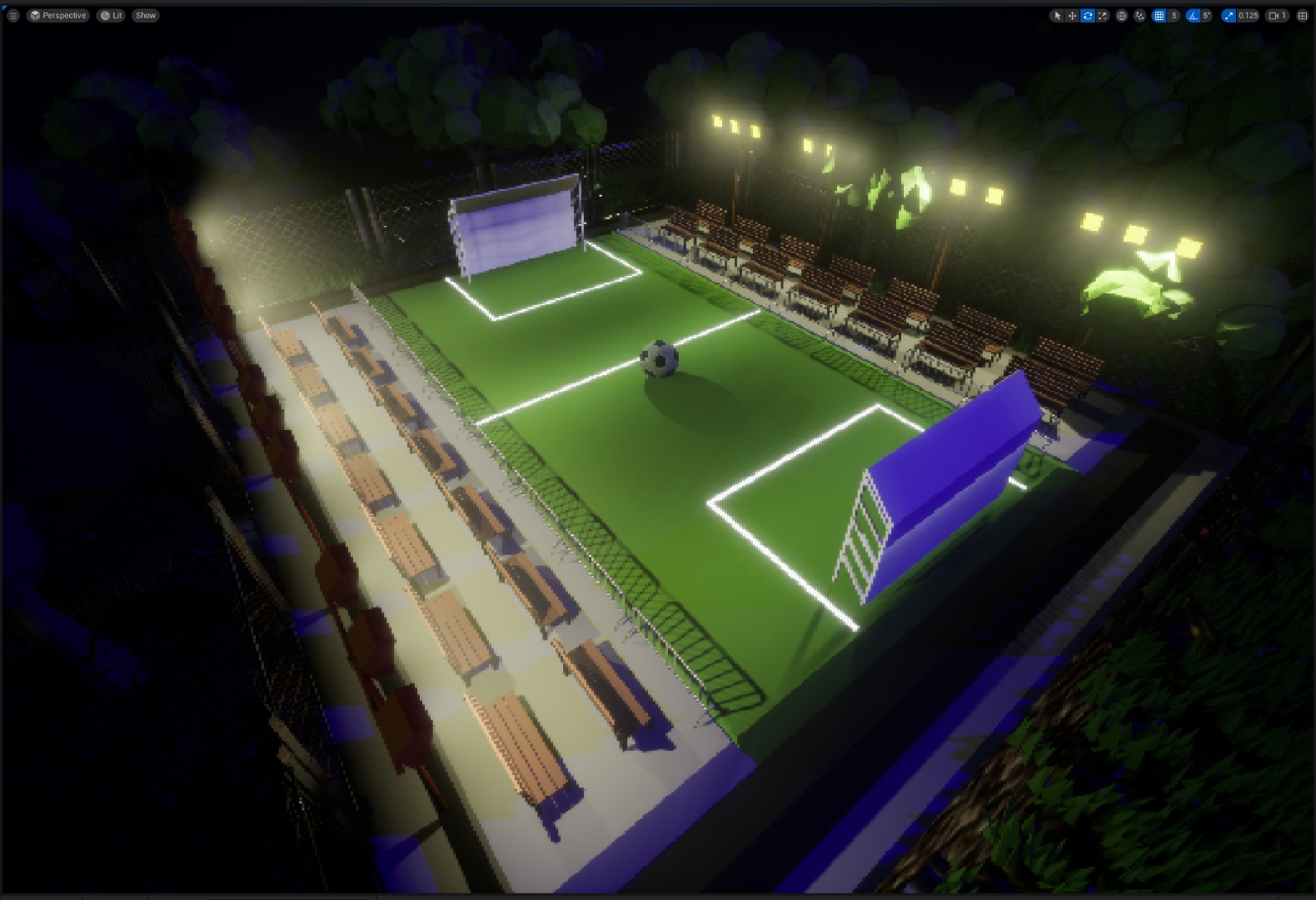
- Football Stadium - full low-poly stadium with stands, wooden benches, floodlights, scoreboard screen, and an in-field soccer ball. Aimed to be a side quest for the player to explore and receive a reward.
- Mechanical Jackson Arena - A stalker mini-boss, capable of teleporting throughout the playable zone and aggressively attacking the player.
Satirical Screens
The Ad Screens on Boss Mech 2
The Boss Mech 2 features a ring of in-world monitor meshes displaying fully textured satirical content - each one a different fake internet nuisance:
- A BSOD reading "Your PC ran into a problem and needs to restart" - 20% complete
- A Windows Update screen - "Working on updates, 6% complete. Don't turn off your PC"
- "Give in to our obnoxious and appealing Ads" - Windows 11 upgrade prompt mockup
- "You may block all ads - Install Ad Blocker and continue"
- FreeSteamGames-totallynotfake.com - a fake human verification / scam offer screen ("Download WannaCry Game for 2 minutes!")
These are genuine Blueprint-driven dynamic textures rendered onto mesh monitor props - not post-process overlays. Each monitor is a distinct static mesh with its own material instance.
Technical Breakdown
Systems & Architecture
// BSOD material graph
The AI system uses UE5's simply uses pure AI logic in Blueprints. No AIController, Blackboard, nor Behaviour Tree was used. Each enemy type has the core behaviour from the parent enemy with some having additional behaviour on top.
Rendering uses Lumen Reflection for metallic surface clarity (SSR was too noisy on glossy materials), with Bloom enabled for volumetric atmospheric lighting. Motion Blur was disabled; Shadow quality increased for sharper edges at a slight performance cost. Global Illumination was evaluated but excluded from the final build as it interfered with the emissive-driven lighting design. Plus, it was extremely taxing on the GPU.
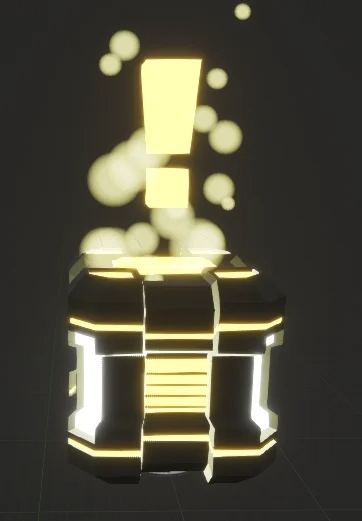
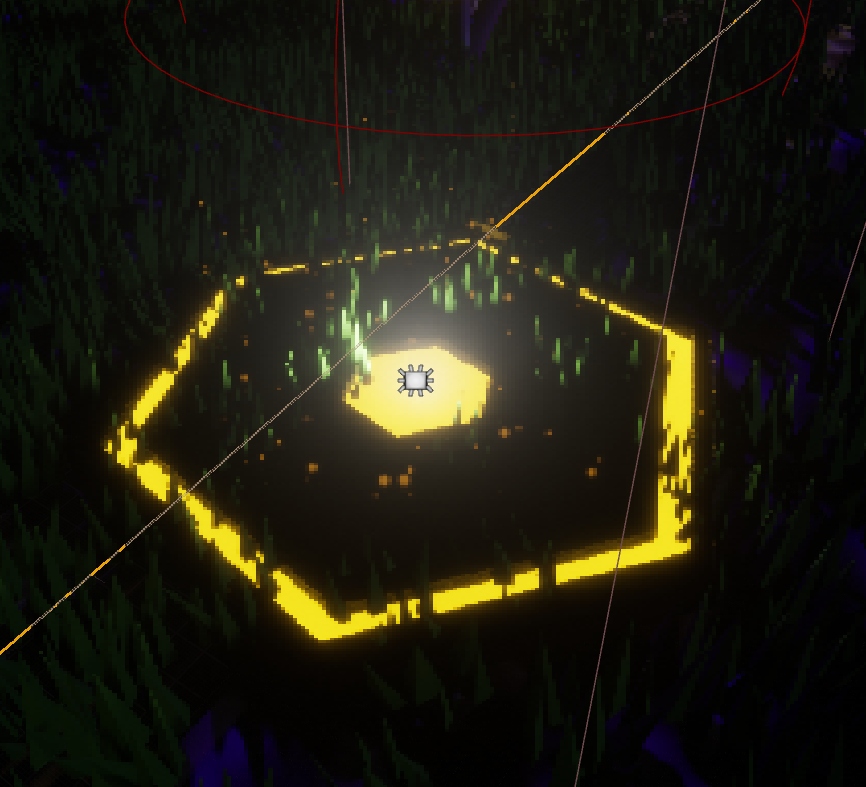
Interactables include breakable crates, playable football pitch, and a goal reward crate with a Niagara exclamation particle effect. The road mesh was exported to Blender to remove one side for custom intersection building - no stock road mesh supported the layout.
Challenges & Lessons
What Went Wrong (And What I Learned)
UE5.2.1 crashed approximately 105 times across development. Nearly all crashes were unknown, and each introduced an array of work I have lost. A good deal of progress was lost - not everything initially planned made it into the final build.
Mechanical Jackson Mini-Boss's teleportation was quite difficult. I spent a lot of time making sure the logic was correct, as the mini-boss initially teleported outside the world or in a completely different area. In few cases, it would disappear and not spawn after teleporting.
The pressure plate puzzle was cut not because it was broken, but because getting timing and player feedback right was eating into the remaining schedule. I learned that I need to descope before I run out of time, not after.